

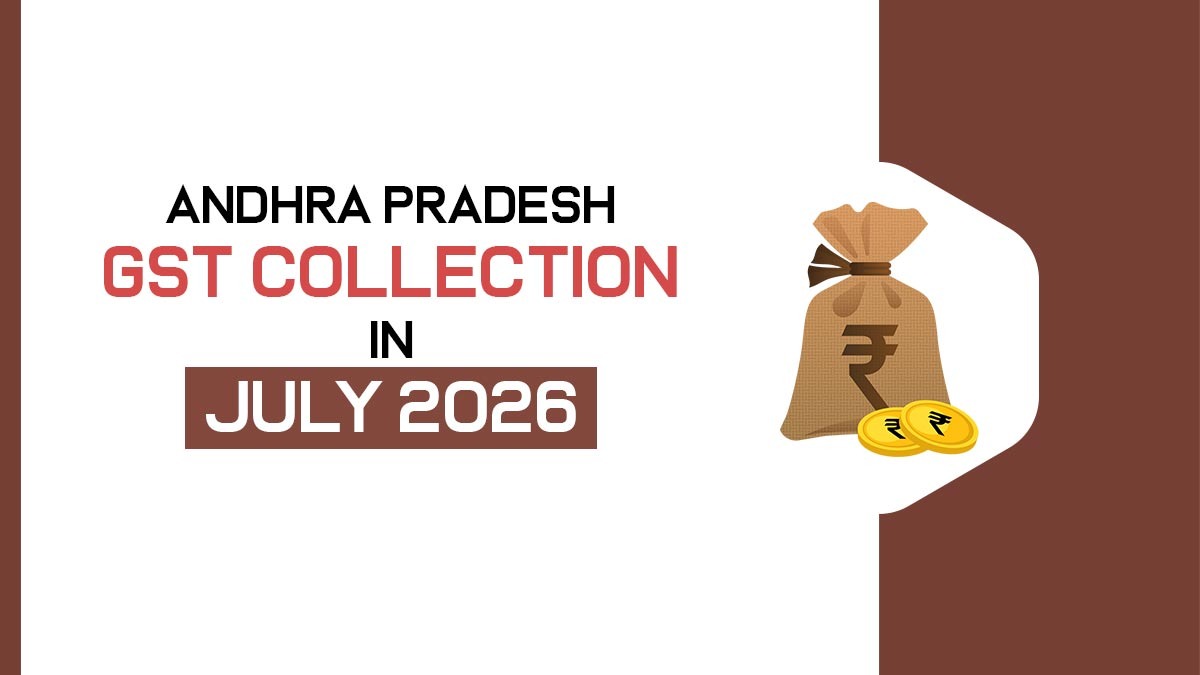
The net GST collections of the State of Andhra Pradesh have been at Rs 13,283 crore till July 2026. It attained a 21% year-on-year growth against the national average of 17 per cent, while total commercial tax collections surged 20 per cent to Rs 20,464.7 crore during the period, the official stated.
According to the Chief Commissioner of State Tax, A Babu, the net GST collections in July 2026 stood at Rs 3,268 crore, which is an increase of 12% from Rs 2,930 crore in July 2025, marking the fourth successive month of year-on-year growth in the current financial year.
Babu stated that till July 2026, the net GST collections have reached Rs 13,283 crore from Rs 10,993 crore in the corresponding period last year, showing 21% growth.
Commercial Tax Revenue Hits New High Despite GST Reforms
As per the Commercial Taxes Department, total commercial tax collections up to July 2026 have surged to Rs 20,464.7 crore compared to Rs 17,059.6 crore a year earlier. Collections in July have surged 14% to Rs 5,105 crore compared to Rs 4494 crore in the corresponding month last year.
According to the department, the state’s growth was achieved even after the GST 2.0 rate rationalisation amendment, which aims to ease the tax framework and reduce compliance costs for businesses.
In July, Integrated GST (IGST) settlement stood at Rs 1,993.8 crore, registering a 17.04 per cent surge over July 2025 and showing the third-highest monthly IGST settlement obtained by the State, while petroleum VAT collections surged by 18% to Rs 1,686 crore, Babu stated. Also, it adds that professional tax collections have surged 13% to Rs 49.7 crore, supported by Aadhaar integration and expansion of the taxpayer base.
Andhra Pradesh Overtakes Several Major States
As per the department, a 21% rise in the net GST collections of the State of Andhra Pradesh till July was higher than the national average of nearly 17% and surpassed Telangana (19.7 per cent), Tamil Nadu (18.4 per cent) and Odisha (5.9 per cent), while Karnataka (23.5 per cent) and Kerala (22.3 per cent) recorded higher growth.
The collections in July have surged every year since the roll-out of the GST in 2017 even after policy-driven rate reductions, showing enhanced taxpayer compliance and robust tax administration.
Read Also: How Meaningful is GST Implementation in India
AI-Powered Enforcement Improves Tax Compliance
The department gives credit for the rise in revenue to AI-based data analytics, AI-powered scrutiny, AI-driven IGST reversals, UPI-based analytics enforcement, Distribution Companies (DISCOM)-linked registration verification, Aadhaar-integrated expansion of profession tax, stronger enforcement and broader economic activity.
It stated that AI-driven scrutiny, machine learning-based risk scoring, inter-departmental data sharing, predictive analytics and digital payment initiatives have strengthened compliance, reduced incorrect ITC claims and improved revenue mobilisation, while the department will continue to expand such initiatives during the rest of FY2026-27 to sustain the growth momentum.