

The Delhi High Court has permitted the consolidation of GST SCNs covering multiple FYs under both Section 73 and 74 of the CGST Act. The bench of Justice Nitin Wasudeo Sambre and Justice Ajay Digpaul has mentioned that the language used in Sections 73 and 74 of the CGST Act, especially the expressions for any duration and for the same periods, specifies the issuance of notices which include multiple financial years.
It said that the regulatory structure does not confine these consolidations merely to the cases that comprise fraud or GST ITC misuse, and that even disputes of the classification or tax rate can be adjudicated via a consolidated notice, given the reason stayed identical.
Recommended: How GST Software Resolves GSTR-3B & 2A/2B ITC Mismatches
The issue is of a GST audit that was conducted for the period from FY 2017-18 to FY 2021-22. In the audit, an Observation Memo identifies an obligation of 49.52 lakh, which the applicant paid. But the case escalated when the department furnished an SCN asking for a demand of 18.67 crore due to the alleged wrongful application of a concessional 12% GST rate on works contract services, including an additional 1.30 crore for alleged non-payment of GST at 28%.
Also, penalties under Section 74 and Section 122 of the CGST Act were proposed. The same culminated in an Order-in-Original on 31 January 2025, confirming the whole demand, including a 200% penalty.
The applicant before the HC contested the procedural validity of the proceedings, claiming that the consolidation of multiple fiscal years into a single Show Cause Notice (SCN) and adjudication order was not allowable.
It was claimed that the case comprises a classification dispute instead of a fraud or incorrect availment of the ITC, and thus, each fiscal year needs to be analysed separately. The applicant put reliance on specific decisions of the Bombay High Court, which has opted for a different opinion in similar non-fraud matters.
The Court put reliance on its earlier ruling in the Ambika Traders case, again confirming that consolidated Show cause notices in multiple years are lawfully allowable under both Section 73 and Section 74.
The Court clarified that, despite differing opinions from other High Courts, it is obligated to follow its own precedents. It also observed that the mere existence of similar issues pending before the Supreme Court does not weaken the binding nature of existing judgments.
The Court chose not to evaluate the merits of the tax demand, stating that the petitioner has a viable alternative remedy through an appeal under section 107 of the CGST Act. Citing established principles from the Supreme Court case Whirlpool Corporation v. Registrar of Trademarks, the Court emphasised that writ jurisdiction should not be invoked when a statutory appellate mechanism is available.
Consequently, the High Court dismissed the writ petition, allowing the applicant the opportunity to pursue appropriate remedies under the GST law. The Court made it clear that all matters regarding the merits of the case remain open for consideration by the appellate authority.
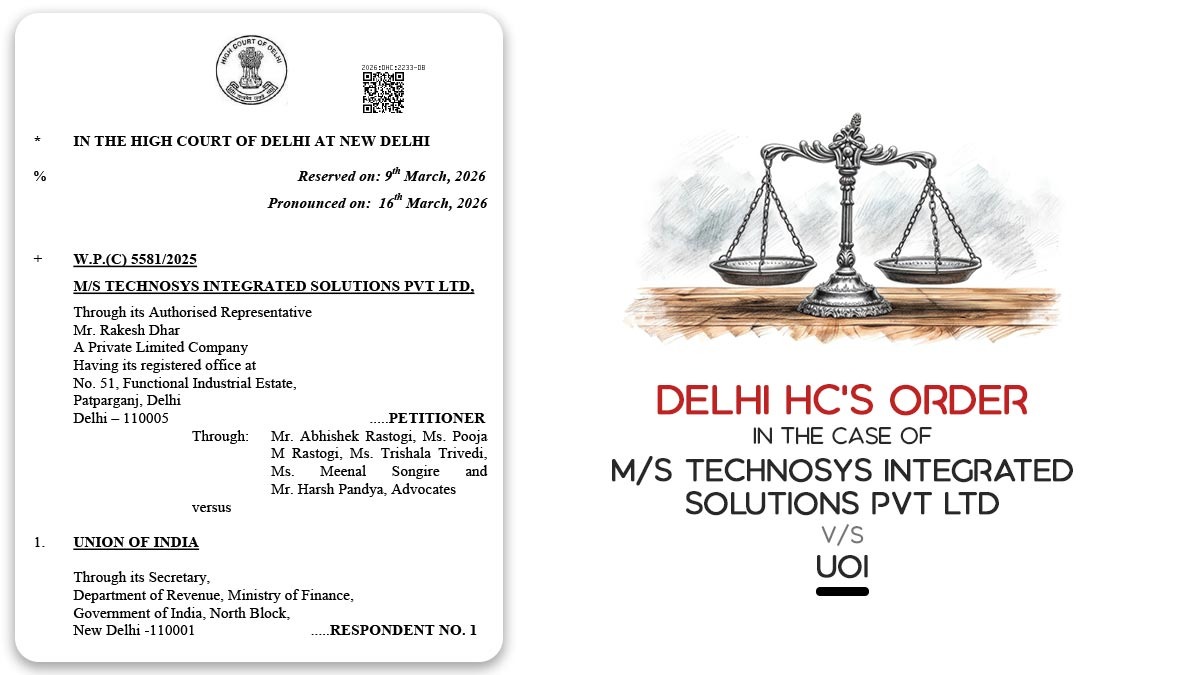
| Case Title | M/S Technosys Integrated Solutions Pvt Ltd vs UOI |
| Order No. | W.P.(C) 5581/2025 |
| For Petitioner | Mr Abhishek Rastogi, Ms Pooja, M Rastogi, Ms Trishala Trivedi, Ms Meenal Songire, Mr Harsh Pandya |
| For Respondent | Ms Anushree Narain, Mr Yamit Jetley, Mr Naman Choula |
| Delhi High Court | Read Order |