

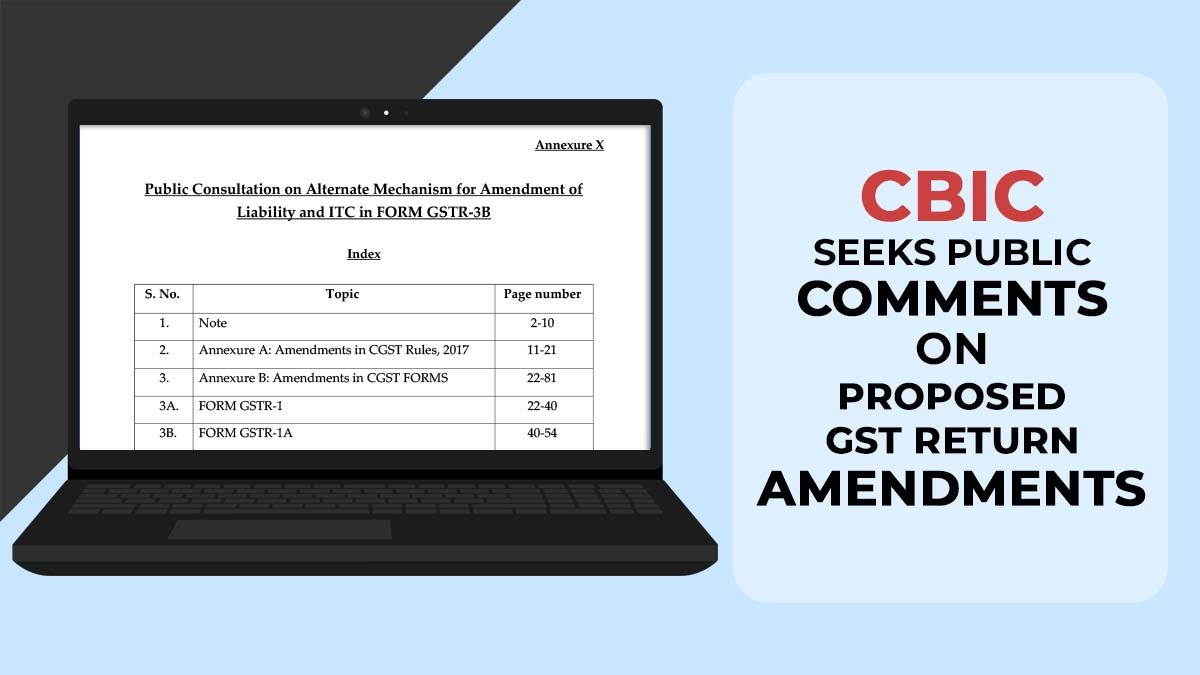
The Central Board of Indirect Taxes and Customs (CBIC) has requested public comments and recommendations on the proposed alternate procedure for making revisions to tax liability and ITC in GST returns. The motive of the proposed revisions is to reduce mismatches between GST returns, reduce unnecessary notices and intimations, and enhance the precision of ITC reporting across the supply chain.
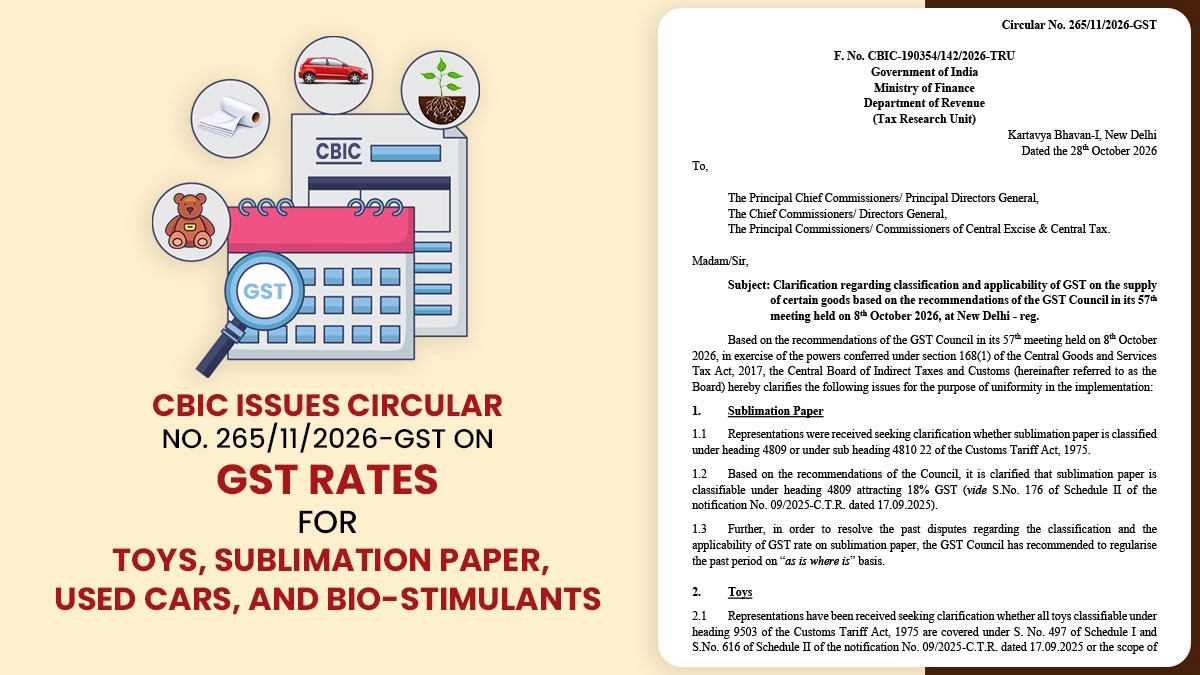
This initiative has arrived after the recommendations made in the 57th GST Council Meeting conducted on October 8, 2026. The GST Council suggested revisions to the GST return filing procedure to ensure effective reconciliation between GSTR-1, GSTR-1A, Invoice Furnishing Facility (IFF), GSTR-3B, and GSTR-2B.
From November 1 to November 30, 2026, the proposed procedure is available on the MyGov portal for public consultation. Taxpayers, tax professionals, industry associations, and other stakeholders can provide their feedback and recommendations in this period.
Proposed Changes in GST Returns
The proposed mechanism consists of various revisions to GST forms and norms to enhance the reporting and correction of tax liability and ITC.
Revisions in GSTR-1, GSTR-1A and IFF
GST Council has suggested improvements in GSTR-1, GSTR-1A, and IFF to enhance reconciliation with GSTR-3B. Such revisions will help ensure that outward supply details notified by the taxpayers match their tax obligations reported in GSTR-3B.
Electronic Statement for Reverse Charge Mechanism
Under the CGST Rules, 2017, a new Rule 86D has been proposed. It will roll out an Electronic Statement of Tax Paid on a Reverse Charge Basis and Input Tax Credit Claimed on the GST portal.
The facility shall support taxpayers in accurately declaring their Reverse Charge Mechanism (RCM) tax liabilities and related ITC claims in GST returns.
Correction of Tax Liability in GSTR-3B
A new Sub-rule (1A) under Rule 61 has been proposed to provide a mechanism for rectifying tax obligations notified in GSTR-3B. The purpose is to align the reported obligation in GSTR-3B with the information provided in GSTR-1, GSTR-1A, and IFF.
Key Amendments in Form GST DRC-03
The GST Council has suggested amendments to Form GST DRC-03. Taxpayers should furnish information on the underlying invoices against which tax payments are made. The same shall enhance payment tracking and furnish clarity for tax adjustments.
Improvements in Invoice Management System (IMS)
A proposed amendment to Rule 60 will permit receivers to accept, reject, or keep pending inward supply documents on the Invoice Management System (IMS), subject to stated conditions. This will assist in enhancing the accuracy of ITC statements generated in GSTR-2B.
Electronic Credit Reversal and Reclaim Statement
A new rule, 86C, has been proposed to roll out an ‘Electronic Credit Reversal and Reclaim Statement’ on the GST portal. This facility will assist taxpayers in maintaining an accurate record of Input Tax Credit (ITC) that has been reversed and subsequently reclaimed in their GSTR-3B returns.
ITC Correction in GSTR-3B
To provide a mechanism for rectifying the Input Tax Credit (ITC) reported in GSTR-3B, a new sub-rule (1B) has been proposed under Rule 61. This facility will ensure that the ITC claimed in GSTR-3B aligns with the eligible credit reflected in GSTR-2B.
Public Consultation and Implementation Date
The CBIC has requested stakeholders to examine the proposed alternate mechanism and provide their comments via the MyGov portal. From November 1 to November 30, 2026, the consultation window will remain open.
It has been recommended that the proposed changes be implemented starting from the GST return period for April 2027. The final procedures may be adjusted based on feedback received from taxpayers and other stakeholders.
Objective of the Proposed GST Return Reforms
The proposed reforms aim to ease GST return filing, enhance precision of tax liability and Input Tax Credit (ITC) reporting, and reduce discrepancies across various GST returns.
Enhanced reconciliation between GSTR-1, GSTR-3B, and GSTR-2B is anticipated to lead to a decrease in the number of notices and demand notices issued by the system due to reporting mismatches.