

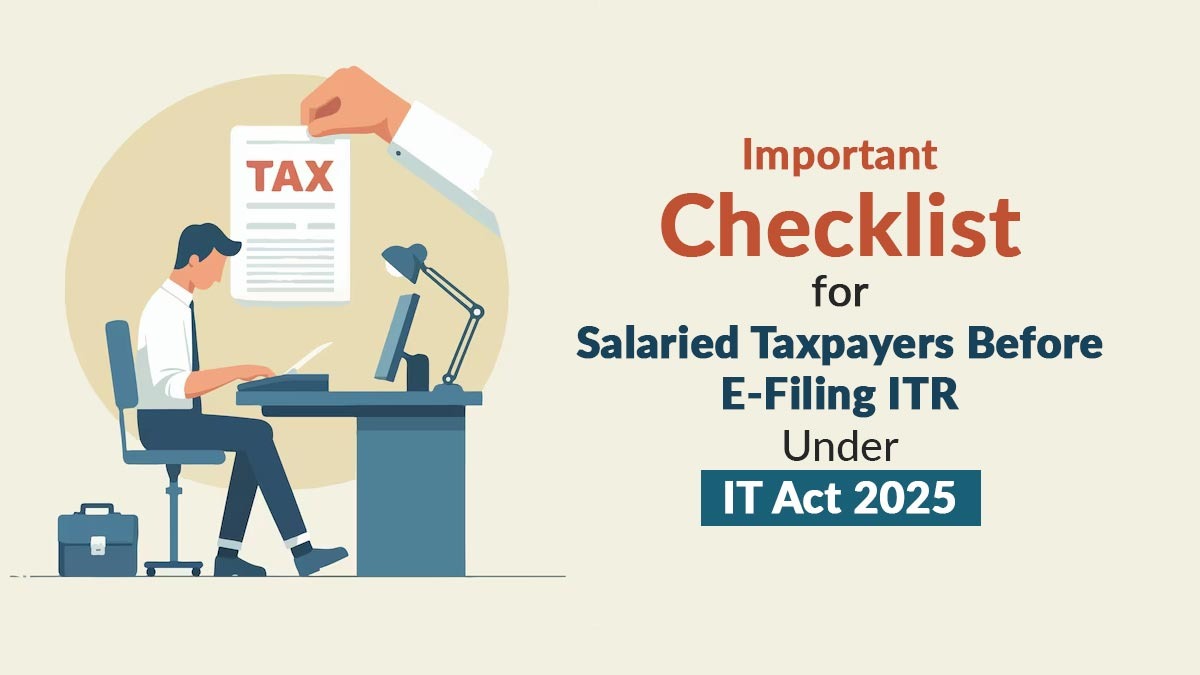
The Income Tax Act 2025 has been effective since 1st April 2026. It specifies that the new law will apply to the income tax return you submit in 2027 for the tax year 2026-27.
There have been no changes to income tax rates; however, there have been modifications regarding various sections, forms, and reporting requirements. It is essential for salaried taxpayers to understand these revisions when reviewing their salary and tax records this year and when filing their next ITR.
What Tax Section Changes Should Salaried Taxpayers Be Aware Of?
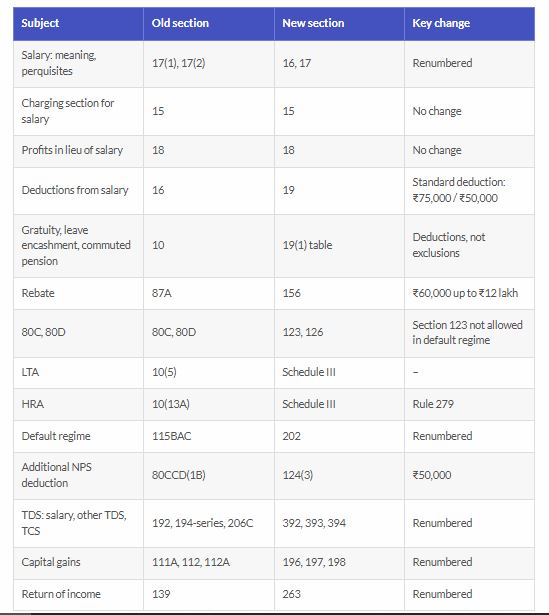
Reforms in section references from the Income-tax Act, 1961 to the Income-tax Act, 2025:
What Do Salaried Taxpayers Need to Check This Year?
Taxpayers must check the below-mentioned points-
- HRA: Check the city classification and landlord details in Form 124. Keep the rent agreement and rent receipts for your records.
- Declarations: Compare Form 124 with the documents filed as evidence. Verify NPS, health insurance, and the ₹1.5 lakh deduction u/s 123.
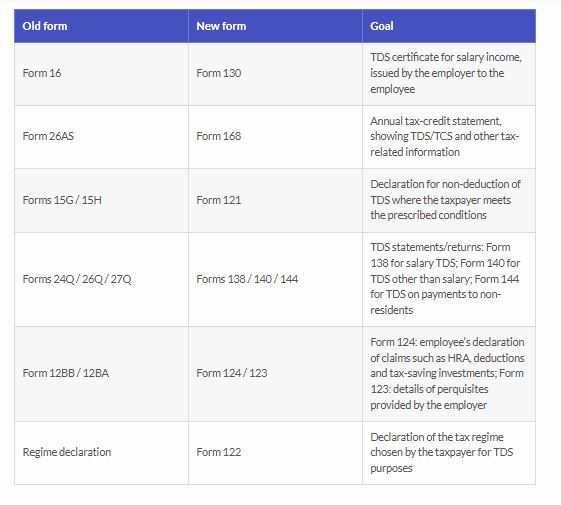
- Payroll TDS: Confirm your chosen tax regime; if Form 122 is not submitted, the default tax regime will apply. Ensure that the default tax regime does not include items from the old tax regime.
- Job changes: Ensure that salary and TDS from your previous employer have been accurately declared to your new employer.
- Tax credits: Reconcile Form 168 (the new Form 26AS) and AIS with your payslips. Validate interest, dividend, and broker- provided capital-gains statements.
If there is any discrepancy, then the taxpayers are advised to inform the payroll team early so that TDS can be rectified within the said time. In case of a credit gap, ask the employer to file a correction in Form 138. The deadline for the July–September TDS return is October 31.
Taxpayers must utilise AIS feedback to show the wrong entries, pay advance tax on income on which no TDS has been deducted, and keep the supporting documents.
Which Tax Forms Have Been Revised Under the IT Act 2025?
The main change is in the numbering of the tax forms; Form 16 has now been replaced by Form 130, which you receive from your employer.
It is unclear whether the new ITR forms will keep the existing ITR-1 and ITR-2 names and formats. Till now, return forms for the tax year 2026-27 have not been notified.
Should the Section References in Salary Slips be Correct?
Yes.
TDS returns should include the new section 392/393 codes, as the use of incorrect codes could lead to issues with tax-credit matching in Form 168. Form 130 should also incorporate references to the new 2025 Act.
The old references appearing on pay slips (such as Section 80C) are largely just for show; nevertheless, taxpayers should ask their employers to ensure that the tax regime flag, the specific section applicable to each deduction, HRA city and landlord details, the value of perquisites (as per Form 12B), and information regarding previous employment are all correctly recorded.
What Changes Should Salaried Taxpayers Expect When Filing ITR in 2027?
Taxpayers must note that-
- Reconcile Form 130 with Form 168 and the AIS, and report capital gains under Sections 196/197/198.
- Gratuity and leave encashment are declared via the Section 19 table.
- Section 202 is the default, and non-business filers can switch regimes each year in the ITR.
- For ITR filing u/s 263, the 31 July deadline remains the same.
Taxpayers should calculate their current-year tax under the 2025 Act, compare both regimes before the March payroll cut-off, and retain supporting evidence such as copies of Forms 122 and 124, along with snapshots of their AIS.
Under the new Income Tax Act 2025, brought-forward losses will retain their existing nature, and no new ‘carry-forward’ period will be granted for them. Taxpayers should derive the opening balances from the ‘carry-forward’ schedule of their AY 2026-27 tax returns, and also ensure that the relevant computations and acknowledgements are preserved.
Taxpayers can also use the most trusted Gen Income Tax Software to prepare income tax returns, manage tax computations, and maintain relevant tax records, making the ITR filing process more organised and efficient.