

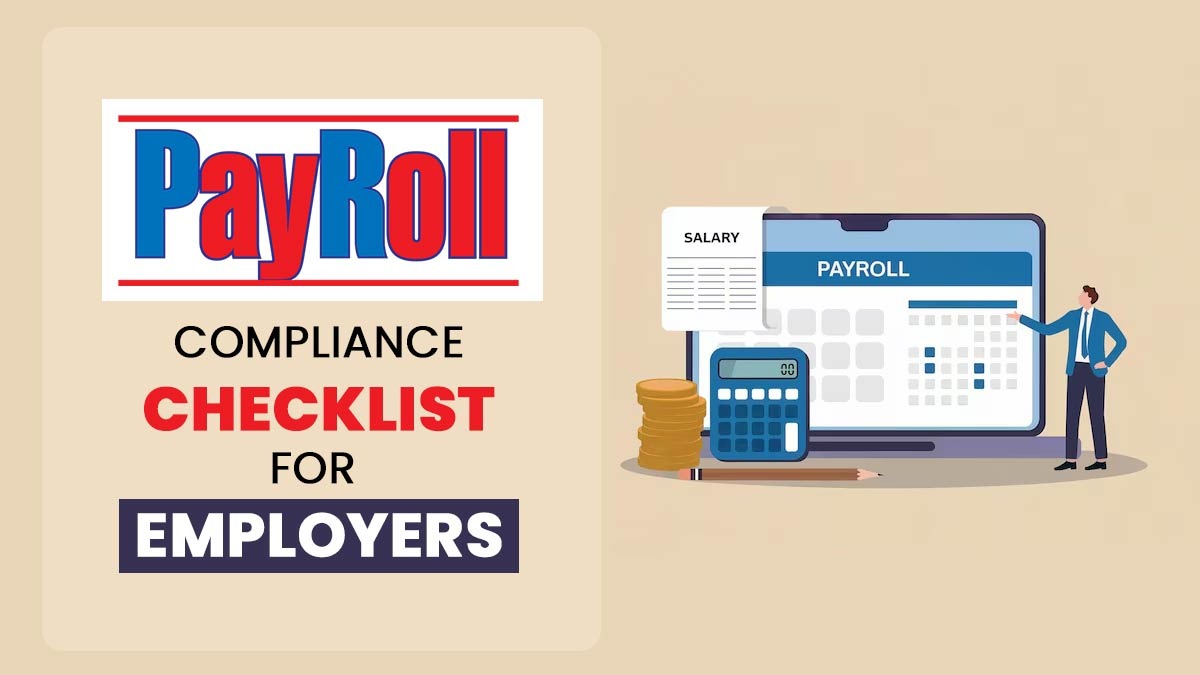
The operations of payroll are more than just computing salaries and transferring money to employees’ bank accounts. In India, employers should handle statutory deductions, tax withholding, social security contributions, wage records, payslips, and State-specific requirements.
The same payroll compliance checklist assists employers in analysing key provisions before, during, and after every payroll cycle.
Understanding Payroll Compliance & Its Importance
Payroll compliance signifies following the laws and statutory provisions that apply when computing, deducting, and paying employee compensation. In India, payroll compliance includes areas like wages, PF, ESI, income-tax withholding, professional tax, payslips, records, and applicable State labour requirements.
An effective payroll compliance procedure lessens the possibility of wrong deductions, delayed statutory payments, employee disputes, interest, and penalties. Since requirements can differ based on the type of establishment, category of employees, and the state, employers should maintain a written checklist for payroll compliance rather than relying solely on payroll software.
Essential Payroll Compliance Checklist Before Processing Salaries
Before processing salaries, check the payroll compliance checklist provided below:-
Review and Verify Attendance, Leave & Variable Pay Records
Review attendance, approved leave, overtime, incentives, bonuses, commissions, reimbursements, and deductions before finalising payroll. Statutory calculations can be impacted by overtime and specific wage elements.
The Ministry of Labour’s March 2026 FAQs state that, for the purpose of calculating the 50% wage component under the ‘Code on Wages’, overtime is also considered part of the remuneration taken into account.
Check Employee Information and Payroll Records
Prior to processing payroll, check employee names, PAN, Aadhaar-linked information where applicable, bank details, UAN, ESIC insurance number, and tax declarations. Check joining dates, employment status, and any revisions made in the month.
Employers under the 2026 Central Rules are required to keep stipulated employee, attendance, and wage-related records. The Social Security Central Rules mandate certain records to be maintained and updated.
Confirm Salary Components and Applicable Statutory Deductions
Validate the salary structure of the employee against the applicable wage rules and statutory contribution provisions. The definition of ‘wages’ under the Labour Codes and the ‘50% rule ‘, along with how certain specific components excluded from the definition of wages are treated and influence the calculation of various statutory benefits.
Therefore, employers should review their salary structures, rather than assuming that existing CTC templates will automatically remain compliant with the regulations.
Recommended: Manual vs Automated Payroll Software: Which Is Best for SMEs?
Complete Checklist of Statutory Payroll Compliance
An employer should follow this statutory payroll compliance checklist, including PF, ESI, TDS, professional tax, etc.
Provident Fund (PF) Compliance Provisions
Eligible establishments should adhere to EPF provisions along with the employee and employer contributions, UAN-related processes, monthly ECR filing, and contribution payment.
Employers should ensure that employee UAN details, contribution records, and ECR information are correct and reconciled with payroll records.
Employees’ State Insurance (ESI) Compliance Requirements
ESI-covered employers should identify eligible employees, deduct the employee contribution, add the employer contribution, and deposit the amount within the stipulated timeline.
At present, the ESI contribution rates are 0.75% for employees and 3.25% for employers. The standard coverage wage limit is ₹21,000 per month, while for persons with disabilities, this limit is ₹25,000; this is subject to the applicable ESI provisions.
Employers must analyse employee eligibility whenever salary or employment status changes to ensure that ESI deductions and contributions are applied appropriately.
Salary TDS and Income Tax Compliance Management
The Income Tax Department has mentioned that salary pertaining to the FY 2025-26 and paid up to March 2026 falls under the old Act, whereas salary paid from April 2026 onwards for the tax year 2026-27 falls under the new Act.
For salary TDS, Section 392 of the IT Act 2025 includes the appropriate provisions from 1st April 2026. Employers should update their payroll procedures, tax computations, and employee statements consequently.
Professional Tax & Labour Welfare Fund Compliance Checks
Professional tax is specific to each state and applies only in those states or Union Territories that have enacted it. Employers should verify the applicable tax slab, registration process, deduction, and payment requirements for each location.
The requirements for the Labour Welfare Fund differ by state, including contribution rates, coverage, and payment frequency. Employers operating in multiple states should maintain a compliance matrix organised by location.
Salary Disbursement, Payslips and Payroll Records
Employers are required to process salaries within the mentioned wage-payment period and issue wage slips. Payroll records should include salary calculations, attendance, overtime, deductions, statutory contributions, salary slips, tax records, and relevant employee documentation.
Payroll Compliance for New Hires and Exiting Employees
You can review the payroll compliance process with both new and existing employees:-
New Employee Payroll Setup and Statutory Registration
Collect identity, tax, and bank information and discover the applicability of PF, ESI, and other statutory registrations for the new employees. Check VAN details and previous employment details where required. The payroll team should ask for other information if required.
Final Salary Calculation and Settlement for Exiting Employees
Calculate salary payable, unpaid incentives, leave-related amounts, statutory deductions, recoveries, and other applicable components for an existing employee. The timing and elements of full and final settlement must be verified against the applicable employment and labour provisions.
Create Payroll Compliance Calendar & Organise Data
A practical payroll statutory compliance checklist must be organised around recurring due dates instead of maintained as a one-time document.
Create a calendar that includes monthly PF and ESI payments, salary TDS, professional tax, Labour Welfare Fund requirements, periodic returns, annual tax documentation, and State-specific filings.
The 2026 central regulations further reinforce the significance of maintaining complete and up-to-date records. Proof of calculations, payments, filings, and reconciliations must be kept by employers for auditing each payroll cycle.
Payroll Compliance Mistakes Employers Must Be Aware Of
Typical errors comprise incorrect employee classification, outdated salary structures, missed statutory deadlines, wrong State-specific deductions, incorrect PF or ESI eligibility, inaccurate TDS calculations, and incomplete records.
Closure
An appropriate payroll compliance checklist must include central statutory requirements with State-specific obligations and internal payroll controls. This includes employee records, wages, PF, ESI, TDS, professional tax, Labour Welfare Fund, payslips, statutory payments, and record retention.
Employers should keep a watch on their current payroll compliance rules as the labour codes and new income tax structure impact payroll processes in 2026. Concerning revisions in the year, statutory contribution limits and other provisions must be tracked.
Gen Payroll Software by SAG Infotech helps businesses simplify payroll processing, manage statutory deductions, and maintain accurate payroll records. It also supports efficient payroll management by streamlining essential HR and compliance tasks.