

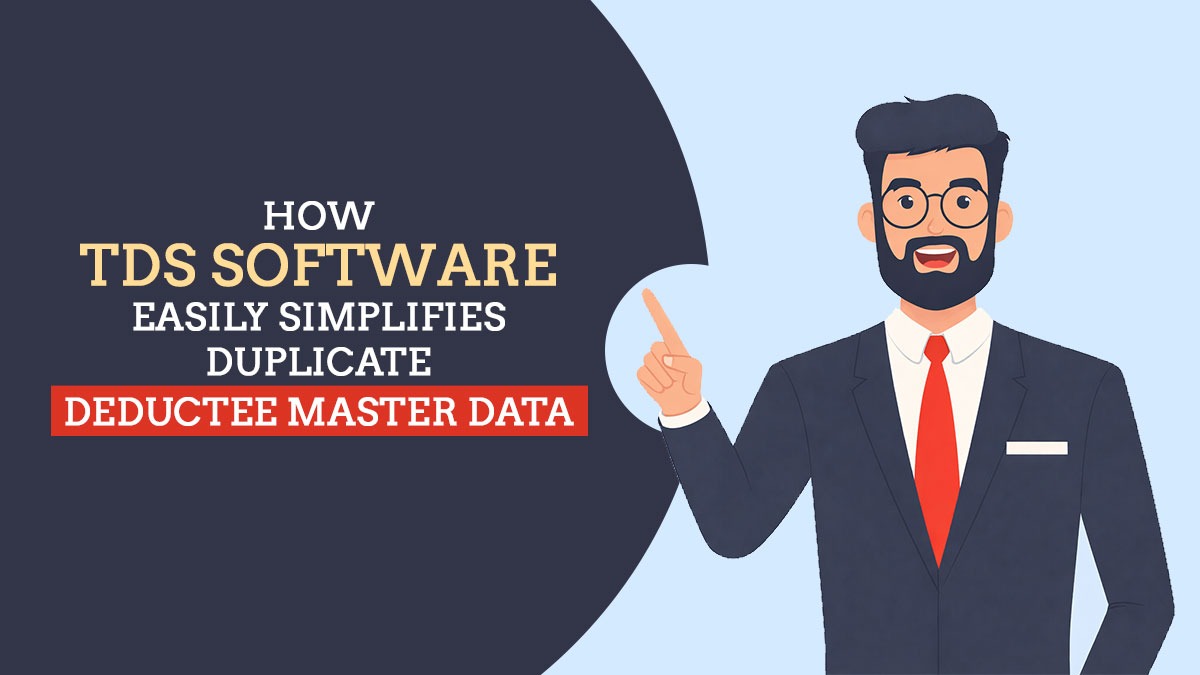
The proper management of Tax Deducted at Source (TDS) data is a fundamental obligation for enterprises that make payments to vendors, employees, and service providers. The information is important for tax deductions, reporting, and return filing; therefore, maintaining appropriate records of deductees is crucial. But over time, various companies face issues of duplicate entries within their deductee master databases.
These duplicate records could cause confusion and result in mismatched transaction information, and increase the chance of errors at the time of TDS returns preparation. To resolve the same issue, contemporary TDS software delivers advanced features that determine duplicate deductee records and streamlines their consolidation into a single, precise master entry. The same procedure confirms data integrity and promotes efficient compliance measures.
What is Deductee Master Data?
A deductee master data is directed to the database that keeps crucial information of all individuals or entities from whom tax is deducted. The same data consists of-
- Name of the deductee
- PAN Card
- Address and contact details
- Payment records and transaction history
- Section under which TDS is deducted
- Deductee type (person, organisation, association, etc.)
As the same information is utilised in various transactions and returns, precision and consistency are crucial.
Why Are Duplicate Deductee Records Appearing?
Entering the identical data more than once results in duplicate records; it often happens by mistake. This could arise via manual typing, importing data from various sources, or not securing the right checks in place. For example, a vendor may be listed twice but with different spellings or formats. Sometimes, these duplicates appear when information is brought in from accounting systems without ensuring that everything is checked carefully.
Common causes of duplicate records are:
- Typographical discrepancies in names or addresses
- Importing data from various financial plans
- Numerous staff partners are creating individual access for the same deductee
- Modifications in the deductee details that guide to creating a new record rather than editing the current one
TDS return preparation can be confused by such duplicates, as payments may get linked with various deductee IDs even though they are of the same entity.
Main Issues Caused by Duplicate Deductee Data
Duplicate deductee records could lead to various operational and compliance issues-
- PAN Mismatch: If one duplicate record consists of a wrong or missing PAN, then it may cause errors at the time of validation.
- Reconciliation Problem: It is not easy to reconcile when payments are spread across multiple records.
- Incorrect TDS Returns- Transactions might be split across various deductee records, which results in inconsistencies in the return file.
- Tax Compliance Risks: Wrong reporting may draw notices from tax authorities or require correction of submitted returns.
Also Read: How TDS Software Generates Multiple Reports for Clients
To prevent such problems, the TDS software has features made to determine and merge duplicate deductee master entries.
How TDS Software Defines Duplicate Records
Before integrating the records, the software should detect duplicates. Advanced TDS solutions use various identification methods.
Name Similarity Detection
Often, the PAN may get missed in one record. In that case, the software compares names using similarity algorithms. For example, “ABC Traders Pvt Ltd” and “A.B.C. Traders Private Limited” may be identified as the same entity.
Address and Contact Matching
Address details, email IDs, and phone numbers support in determining the duplicate records when integrated with name similarity checks.
PAN-Based Matching
The most reliable identifier is the PAN number. If two or more deductee records share the same PAN, the software shows them as duplicates.
User Review and Verification
Almost all TDS software does not merge records without user verification. Instead, it shows a list of suspected duplicates for the user to review and confirm.
The Process of Merging Deductee Master Data
After determining the duplicate records, the process of integration follows the steps below-
Mapping Transaction Data
All payment transactions, challan links, and TDS entries linked with the duplicate records are mapped to the primary record. This assures that no financial data is relinquished.
Consolidating Data
The software consolidates valuable data from both records. For instance, if one record carries a valid email address and the other has a complete postal address, then both can be retained in the merged profile.
Updating References
All system references, like payment entries, reports, and return preparation modules, are updated to specify the primary deductee record.
Fixing the Primary Record
The user selects one record to act as the primary or master record. This record will remain in the system after the merge.
Destroying Duplicative Entries
Post mapping and consolidation, the duplicate record is eliminated from the database while keeping the integrity of all related transactions.
Closure: For tax deductees, having duplicate records can lead to complications in reporting and make it challenging to adhere to tax norms. With the help of the one and only TDS return filing software, this issue can be addressed by recognising duplicates, verifying user information, and securely merging records.
By organising and maintaining details of tax deductees, organisations can simplify the process of preparing their tax returns, enhance the accuracy of their data, and facilitate compliance with tax rules.