

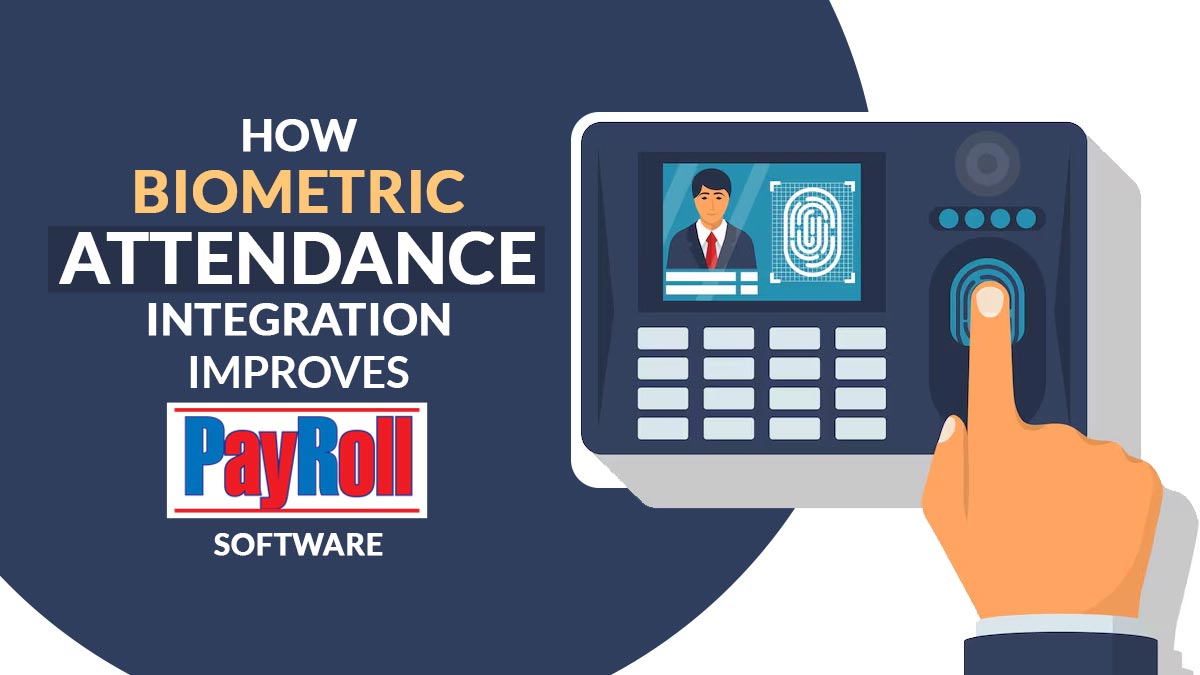
Many companies in today’s business landscape are turning to automation to make their operations more streamlined, accurate, and compliant with regulations. The use of biometric attendance systems integrated with payroll software is one of the most significant developments in this area.
Biometric attendance systems, with the use of unique physical traits like fingerprints or facial recognition, keep track of when employees arrive and leave work. The current procedure supports preventing mistakes that might occur with traditional timecards or manual logs.
When these systems link with the payroll software, they automatically send attendance details for processing salary, payments, saving time, and ensuring that employees are paid appropriately.
The way biometric attendance systems support automating payroll tasks, including their benefits and challenges, is mentioned in this blog.
Define Biometric Attendance
To confirm the identity of employees, Biometric attendance systems use their unique biological features. Such systems deliver reliable and tamper-proof records of attendance rather than relying on traditional methods like punch cards. On integrating with payroll software, they automatically share attendance information to process salaries.
How Does Biometric Attendance Assist with Payroll?
Automatic Time Tracking: Biometric devices can record employees’ clock-in and clock-out times, linking to payroll software. It specifies that HR is no longer required to manually enter attendance data, which saves much time each month.
Accurate Salary Calculations: Payroll software with the support of biometric data can appropriately compute hours worked, leaves taken, overtime, and any late arrivals, ensuring that salaries, deductions, and bonuses are proper.
Overtime and Shift Management: Such systems automatically keep track of extra hours worked for businesses with varying shifts or overtime, which helps to compute the overtime pay accurately without manual input.
Leave Management: Biometric attendance can link with leave management systems. This combination ensures that approved leaves are automatically accounted for, lessening the possibility of salary miscalculations.
Compliance with Laws: In India, precise attendance records are crucial for adhering to various labour laws and taxes. Automating attendance data helps payroll software generate compliant salary reports, reducing the risk of fines.
Quicker Payroll Processing: Automating such processes enhances the speed of payroll, allowing HR teams to manage payroll efficiently, even for large teams.
Advantages of Merging Biometric Attendance with Payroll Software
- Prevents Time Theft– Biometric systems prevent problems such as “buddy punching,” where one employee punches in for another. It specifies that workers are only paid for the hours they actually work.
- Enhances Precision– Automatic data transfer from attendance systems to payroll software lowers the errors that may arise with manual entries.
- Saves Time and Effort– In reconciling attendance records, HR teams spend less time, freeing them to concentrate on crucial work.
- Enhances Clarity– Employees can see how their attendance affects their pay, which develops trust and lowers disputes concerning pay issues.
- Scalable for Growth– Biometric attendance systems can support companies (small startup or a large corporation) as they grow.
- Supports Remote and Multi-Location Teams– Modern biometric systems that use cloud technology can handle attendance for employees in distinct locations, making payroll processing centralised.
Issues in Using Biometric Attendance and Payroll Automation
- Initial Costs- Setting up biometric systems and linking them to payroll software can be costly, which may not be easier for smaller businesses.
- Privacy Issues- As biometric data consists of personal information, the companies need to confirm that they safeguard this data and comply with the privacy laws to prevent misuse.
- Reliance on Technology- If there are technical issues, such as power outages or system failures, attendance tracking and payroll processing can be disrupted. Therefore, it is essential to have backup plans in place.
- Maintenance and Upgrades- Biometric devices require regular maintenance, and software updates may be necessary to ensure security and functionality.
- Employee Resistance- Some employees might feel uncomfortable with biometric data collection; thus, clear communication and thorough training during the implementation process are crucial.
Closure: Biometric attendance systems are becoming vital for automating payroll tasks by improving time tracking accuracy, speeding up salary processing, and ensuring compliance.
When implemented effectively, these systems can reduce errors, lower administrative burdens, and enhance transparency. These advantages are essential for the best payroll software for small businesses, though companies must carefully address privacy and technical challenges to maximise the benefits.