

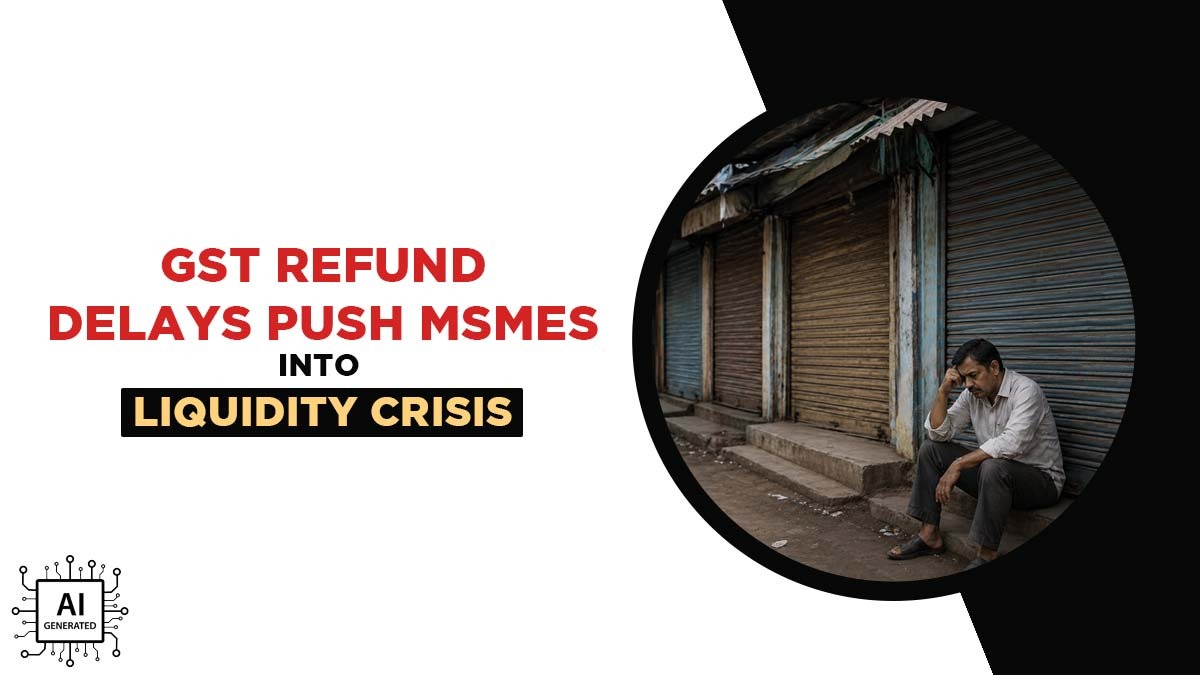
Thousands of small-scale manufacturers in the bicycle, sewing machine, and carton industries are facing a liquidity crisis due to a problematic “inverted duty structure” in Ludhiana, Punjab. Although the government has promised GST refunds within 30 days, local businesses report that 13% of their working capital is tied up for months. As a result, many small factories are forced to shut down every 10 to 15 days.
The problems have arisen because manufacturers are purchasing raw materials such as pipes, paint, and brass at an 18% GST, but they are selling their finished goods at only 5% GST. This creates a tax gap of 13%, which can only be recovered through government refunds. Industrialists argue that by holding onto these funds for an extended period, the government is effectively using the industry’s capital as interest-free loans. As a result, manufacturing units are struggling to pay wages or purchase new raw materials.
Avtar Singh, the representative of the industry, mentioned that small entrepreneurs, often operating with capital as low as Rs 30 lakh, cannot withstand six-month delays. He noted that the sewing machine sector, already struggling against cheap Chinese imports, is heading toward a “sunset” unless such financial and R&D problems are addressed.
Read Also: How GST Software Helps Protect Your Business from Cancellation
The present framework is also making imports more attractive than local manufacturing. Importers pay 5% IGST and sell at the same rate, completely avoiding the refund trap. Industrialists have cautioned that these delays are encouraging “informal trade,” as some businesses have started to avoid issuing invoices altogether to prevent their funds from getting stuck in the GST system.