


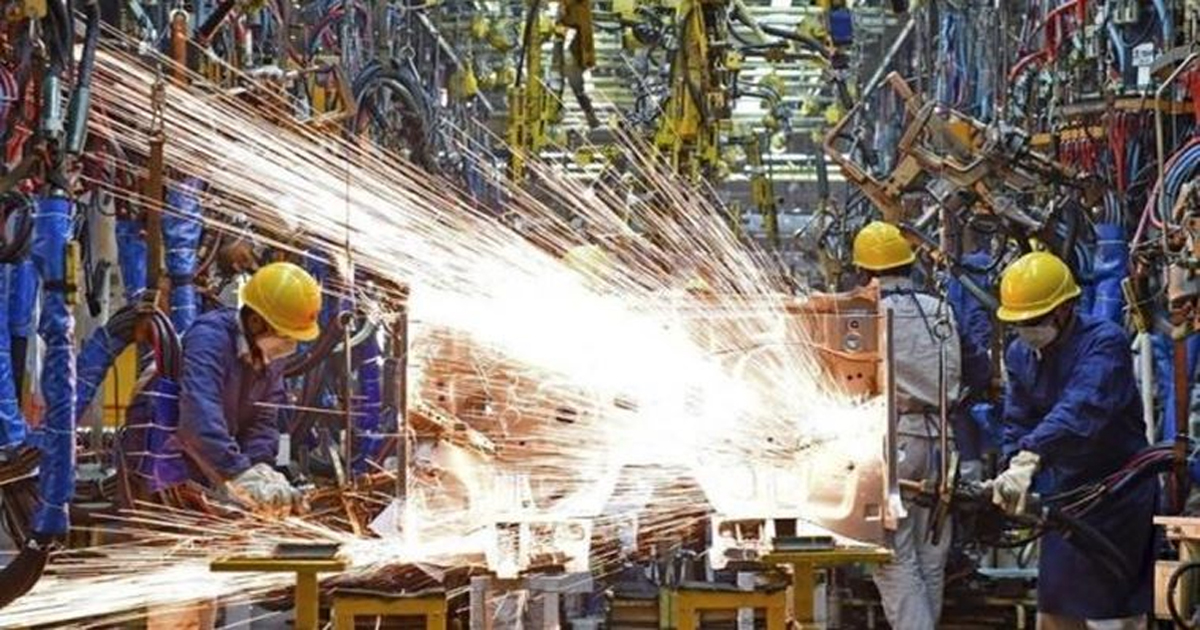
GST was introduced in India on July 1, 2017, to replace many different indirect taxes with one common tax system. When GST was first introduced, India’s factory production slowed temporarily because businesses needed time to understand the new tax rates, billing procedures, input tax credit and compliance rules. In July 2017, the manufacturing PMI fell to 47.9, showing that factory activity had entered a period of contraction.
However, this slowdown did not last for long. As businesses became familiar with the GST system and adjusted their operations, manufacturing activity improved. Over the years, the government has also made several changes to GST to simplify compliance, reduce disputes and make the tax system easier for businesses.
Recent GST reforms have focused mainly on 5% and 18% tax slab rates, along with a special 40% rate for certain luxury and sin goods. Lower GST rates on products such as air conditioners, televisions, dishwashers, solar equipment and some automobile products can help reduce prices and manufacturing costs. This can increase consumer demand and encourage companies to produce more.
MSMEs and manufacturers can also benefit from simpler taxation and better cash-flow management. However, GST compliance can still be difficult for some small businesses. Factory production is also affected by other factors such as consumer demand, exports, interest rates, raw-material prices, global economic conditions and supply-chain problems.
In August 2026, India’s manufacturing PMI stood at 52.8, which was above the 50-point level. This means that India’s manufacturing sector was still growing, although at a slower pace. The recent slowdown is mainly linked to weaker demand rather than a new GST-related problem.
Overall, GST caused a temporary disruption to factory production when it was introduced in 2017, but businesses have now largely adapted to the system. Recent GST reforms are aimed at making taxation simpler, reducing costs and supporting manufacturing, MSMEs, investment and economic growth.







The GST regime has HIT the Garment Export Industry regarding the EPCG system of Importing Capital Goods for Exports.
Earlier Tax Free /Duty Free but now the import will attract GST @ 12 – 18% which will be non refundable , however the same will be added to the Input Credit. What good is the input credit for us when we cannot avail it being 100% Exporters.
We are seriously lagging behind in competition from countries like Bangladesh , Cambodia , Chine etc and now the expensive Capital Goods will add to the cost.