

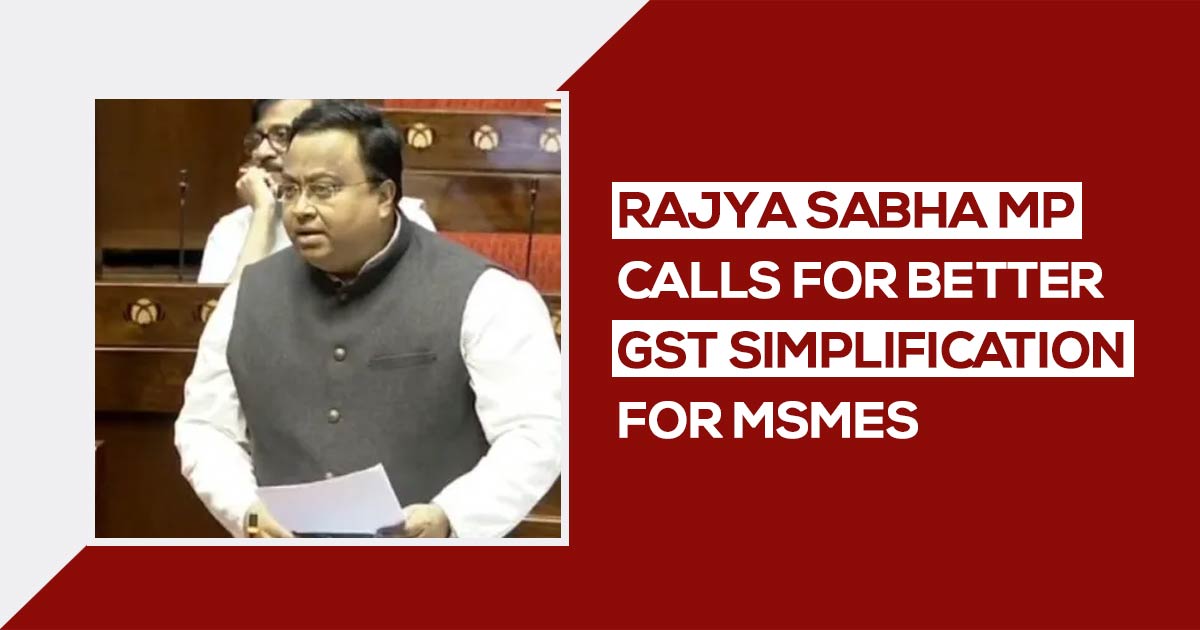
Rajya Sabha MP Sasmit Patra, ahead of the Union Budget 2026–27, stated that further simplification of the Goods and Services Tax (GST), along with tax measures to strengthen the ease of doing business, enhance liquidity for small enterprises, and support sustained economic growth, is needed for entities operating across states and e-commerce platforms.
Patra, speaking at the GST Samvaad 2.0, outlined the need for the next phase of GST reforms to build on trust and system maturity.
“For businesses operating across states, GST compliance continues to involve multiple registrations, parallel audits, and working capital pressures arising from accumulated input tax credits, particularly in sectors affected by inverted duty structures where higher taxes on inputs lead to credits remaining unutilised and constrain cash flows needed for day-to-day operations and expansion. E-commerce sellers and micro-entrepreneurs also face practical challenges due to continued reliance on physical documentation, despite the availability of digital alternatives,” Patra cited.
He also added that stakeholders of small and medium enterprises, even after the introduction of GST 2.0 last year, and ongoing digitisation efforts, continue to encounter intricate compliance needs that affect their operational efficiency and working capital.
Provided the economic importance of small and medium enterprises, which contribute nearly 30% of GDP and employ more than 11 crore people, he mentioned, the policymakers have a chance to pursue calibrated trust-led GST reforms that facilitate compliance, improve liquidity, and support inclusive growth as the tax framework continues to evolve.
MP Patra highlighted that the Goods and Services Tax (GST) was intended to create a unified tax system across the country to make it easier for small businesses and traders to operate. While there have been improvements in simplifying the system and using digital tools, small sellers still face a lot of challenges and paperwork.
Read Also: Budget 2026: FACSI Insists Govt to Introduce MSME-Friendly GST Reforms to Boost Businesses
The MP emphasised the need to simplify the registration process, streamline audits, and speed up the resolution of tax credits. This way, GST can truly help businesses grow while still ensuring the government collects the necessary revenue.