

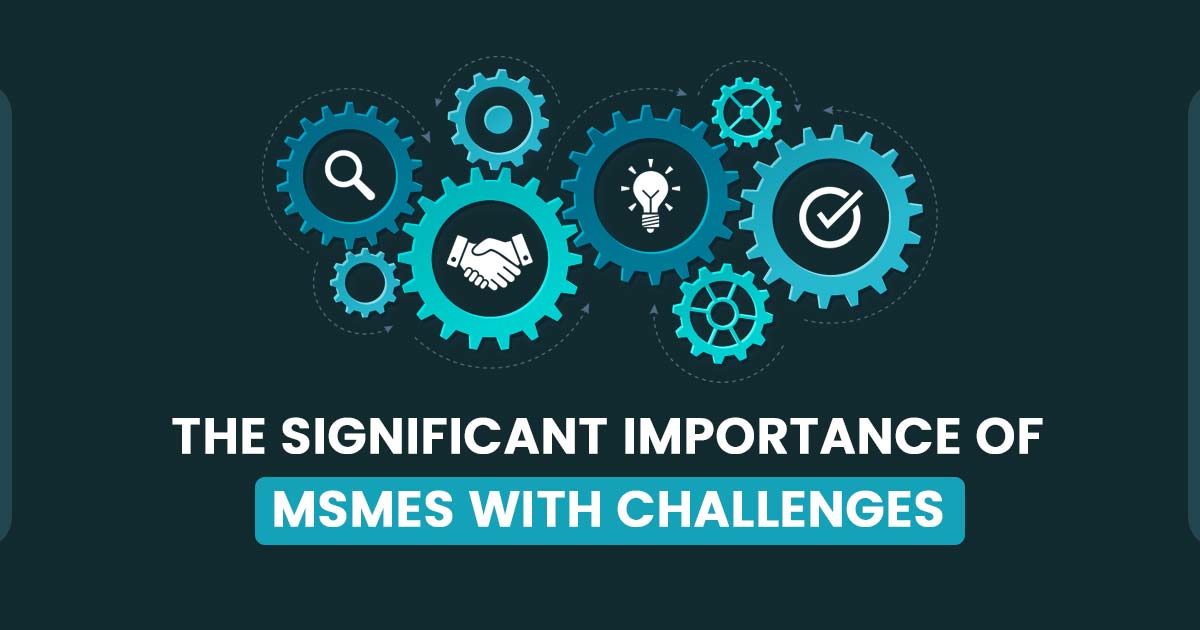
Micro, Small, and Medium Enterprises (MSMEs) in recent years have attained significant importance in driving economic growth and development. Such businesses secure an important role in creating jobs, fostering innovation, and contributing to the overall Gross Domestic Product (GDP) of a country.
The importance has been discussed in this blog, and also why they are regarded as the backbone of many economies worldwide has been taken into account in this discussion.
Define MSME
MSMEs are classified based on their turnover & investment; the detailed criteria vary from country to country. Commonly, Micro enterprises have a small business with minimum turnover & investment. Small enterprises have an average turnover & investment & it is larger than the Micro enterprises. Medium enterprises have a high turnover & investment as comparison to micro & small enterprises.
In India following enterprises shall be classified as micro, small or medium enterprises based on the following norms, namely:
- A micro enterprise, where the investment in plant and machinery or equipment is not more than two crore fifty lakh rupees, and turnover is not more than ten crore rupees
- A small enterprise, where the investment in plant and machinery or equipment is not more than twenty-five crore rupees, and the turnover is not more than one hundred crore rupees
- A medium enterprise, where the investment in plant and machinery or equipment is not more than one hundred twenty-five crore rupees and turnover is not more than five hundred crore rupees
Read Also: Impact of GST on SMEs, MSMEs and Startups
Across various sectors, including manufacturing, services, agriculture, etc, these businesses function.
How MSME Impacts the Indian Economy
In job creation, these MSMEs would play an important role, specifically in developing countries. Such business acts as an important employment source for the people, particularly in rural areas where opportunities are confined. MSMEs help decrease poverty and inequality in society via providing jobs and skills training.
Similar: New Rule of Payment to MSMEs Causes Uncertainty in Textile Markets
Also, MSMEs contribute to innovation and entrepreneurship. Such businesses are called for their agility and capability to adapt to market trends and consumer requirements quickly. MSMEs propel competitiveness and growth in various industries through continuous innovation, leading to a dynamic and vibrant economy.
MSMEs Challenges
MSMEs face various issues that could hamper their growth and sustainability even after their importance. The major issue is access to finance for many small businesses, since they used to struggle to secure loans or investment capital from traditional financial institutions. Also, they have very little access to the markets, a shortage of infrastructure, and regulatory burdens can even hinder the success of MSMEs.
Support and Initiatives from the Indian Govt
Many governments, considering the role of MSMEs in the economy, have executed policies and initiatives to assist such businesses. Such actions comprise furnishing financial assistance, proposing tax incentives, streamlining access to markets, and encouraging entrepreneurship education and training. With the assistance of MSMEs, the makers of the policy have the motive to promote economic development, job creation, and innovation.
Closure: MSMEs are important drivers of economic growth and development, which contribute to job creation, innovation, and competitiveness. Such businesses, even after facing issues, had played a significant role in promoting a dynamic and vibrant economy. Through the assistance of the MSMEs via targeted policies and initiatives, the governments could make an effective environment for such businesses to succeed and contribute to sustainable development.