

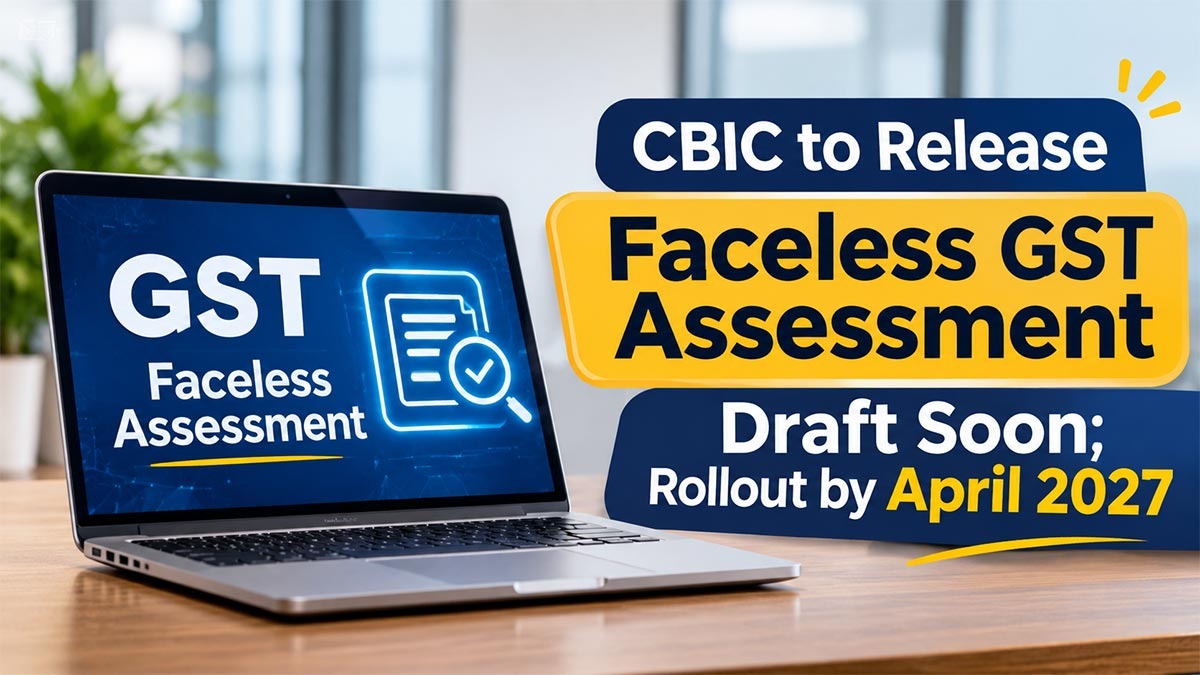
The Central Board of Indirect Taxes and Customs (CBIC) will introduce a draft framework for ‘faceless’ and centralized assessment for approximately 70 lakh taxpayers registered under the Central GST (CGST). A senior official stated that this proposed system is likely to come into effect from April 1, 2027.
CBIC Chairman Vivek Chaturvedi stated that this framework will soon be placed in the public domain for consultation with industry stakeholders.
The proposed system will feature two approaches, based on the size and nature of the taxpayers. Under a centralised administration system, large businesses functioning via multiple GST registrations within or across states will be included, and the smaller taxpayers will be furnished with faceless support.
“We (CBIC) are weaving our thoughts around the two concepts of a faceless and a centralised administration for the CGST taxpayers. And we have created a framework,” Chaturvedi stated at a PHDCCI event.
Larger taxpayers in the centralised system can access a single physical office for services like registration, scrutiny, adjudication, reviews and appeals, irrespective of the number of states in which they function.
Concerning other taxpayers, the department wishes to roll out a faceless assistance system.
Out of the approximately 70 lakh taxpayers registered under CGST, about 2 lakh taxpayers have registrations across more than one CGST jurisdiction, whether within the same state or across different states.
Following the 57th GST Council meeting held on October 8, Finance Minister Nirmala Sitharaman stated that the proposed framework for ‘faceless assessment’ would undergo a consultation process before its implementation in the 2027-28 financial year.
In the proposed system, tax notices, hearings, and orders will be managed via a national platform rather than individual jurisdictional offices. It is anticipated to permit businesses functioning in various states to deal with a single administrative system.
At present, administrative regulation of GST taxpayers is categorised between central and state tax authorities based on a formula determined via the GST Council.
State tax administrations manage 90% of taxpayers with an annual turnover less than Rs 1.5 crore, and the remaining 10% comes under central administration.
Taxpayers with a turnover exceeding Rs 1.5 crore have been divided equally between the two administrations.
Chaturvedi welcomed the GST Council’s decision to withdraw the power of arrest from tax officials, calling it a “historic step.” Additionally, the Council has increased the threshold for initiating prosecution in cases related to GST offenses to ₹5 crore.
He stated, “The message is that tax administration should be an economic partnership rather than an exercise in coercion.”
Chaturvedi also noted that the Council’s decision to limit the inspection of vehicles transporting goods to only their states of origin and destination, requiring prior authorization from a senior officer, would help minimize disruptions for businesses.
Previously, GST officials could stop vehicles transporting goods regardless of their own jurisdiction and demand documentation.
“Our transporters, our manufacturers and our exporters will now move goods nationwide with far fewer stoppages than what was the current practice,” Chaturvedi expressed.
Read Also: Delhi CM Calls for “Faceless” GST System to Cut Harassment and Boost Compliance
In its October meeting, the GST Council decided that during the transportation of goods, only the state from which the goods are dispatched and the state where they are destined may inspect the consignment. States falling along the transit route will not be permitted to stop vehicles for inspection.
An e-way bill is mandatory for the movement of goods valued at ₹50,000 or more, whether within a state or from one state to another.
Source: economictimes.indiatimes.com