

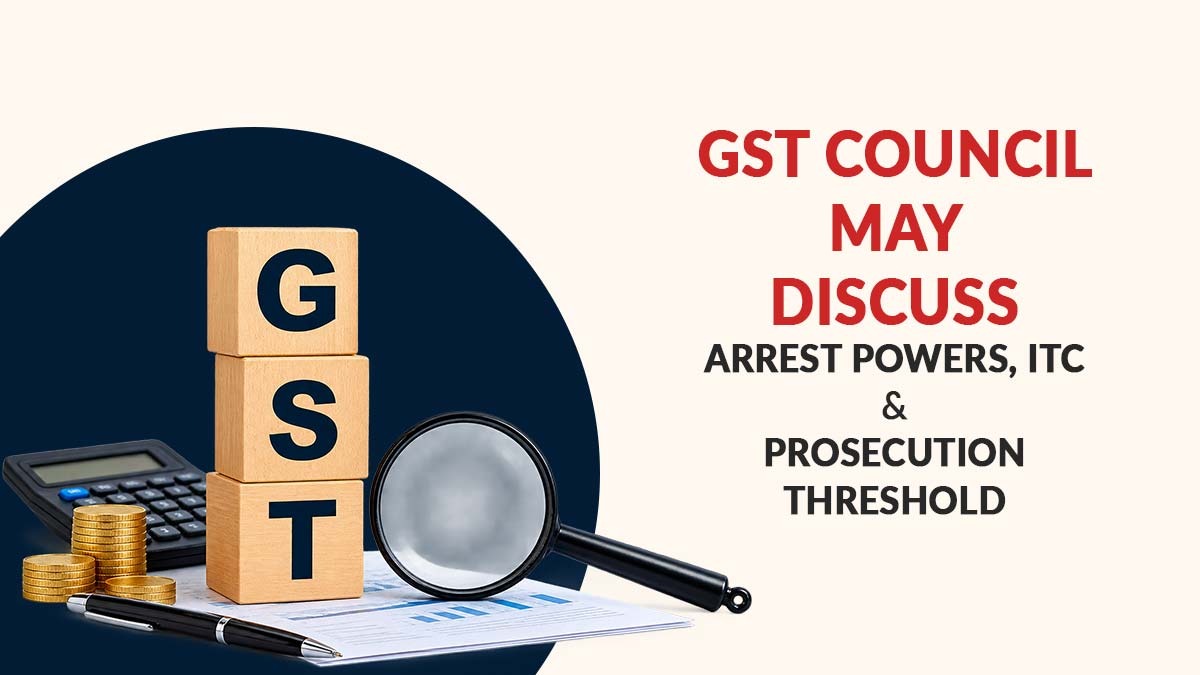
In the GST Council meeting on October 8, consideration of the package of GST process and enforcement reforms can be accomplished, along with a proposal to eliminate the authority of tax officers to arrest taxpayers and require judicial authorities for any arrest.
The scope of consideration can be to raise the limit for launching prosecution from Rs 1 crore to Rs 5 crore and reduce the extent of offences that can trigger criminal proceedings. Additional proposals comprise safeguarding genuine buyers’ input tax credit, facilitating GST registration for small e-commerce sellers, and reducing low-value litigation.
The proposed changes center around Section 69 of the Central GST Act, which currently allows the Commissioner to authorise an officer to arrest a person if certain statutory conditions are satisfied and there are reasons to assume that offences have been committed.
Under the new proposal, this power would be removed from GST officials, meaning that any arrests would require judicial authorisation. Tax recovery, interest, and financial penalties would still apply. However, serious cases involving deliberate evasion or fraud could still be prosecuted in court.
This proposal represents a shift from relying on arrest as a deterrent to using technology for detecting fraud. By eliminating the option for arrests and reserving prosecutions for more serious cases, the emphasis will increasingly be on utilising GSTN’s data capabilities to identify fraudulent activities rather than depending on coercive powers.
There is a proposal to raise the threshold for initiating prosecution from ₹1 crore to ₹5 crore. This would ensure that criminal proceedings are invoked only in cases where the magnitude warrants such action.
The proposals aim to keep routine disputes regarding classification, valuation, and input tax credit out of the criminal process. Of the 24 offences currently subject to prosecution, nine are proposed to be removed, 11 will be retained, and the remaining offences will be softened.
Another proposal desires safeguarding genuine buyers from losing ITC if an upstream supplier did not pay taxes. In this proposal, recovery actions would be directed at the defaulting seller instead.
Additionally, the Council may allow employers to claim GST input tax credit on premiums paid for employee insurance. Currently, group insurance policies are subject to an 18% GST, which businesses cannot claim as a credit.
For small e-commerce sellers, the Council may consider permitting the use of platform warehouses as registered places of business in states where sellers do not have their own physical premises. Sources suggest that this move could help approximately 950,000 small sellers access wider markets.
To reduce litigation, the Council may consider prohibiting GST notices for tax demands below Rs 10,000. These cases account for approximately 20% of all cases under the proposal.
The Council might also explore options for easier GST registration and annual returns, introduce quarterly tax payments for certain MSMEs, implement intelligence-led checks on goods vehicles, and establish a single 5% GST rate without Input Tax Credit (ITC) for deliveries of goods ordered via e-commerce platforms.
Additionally, there is a proposal to revoke the IGST exemption currently available to banks and authorised agencies importing gold, silver, and platinum.
These proposals are a component of the broader GST 2.0 reform process that follows the rate rationalisation in September 2025, which streamlined the tax structure to include rates of 5% and 18%, along with a 40% rate for select luxury and demerit goods.