

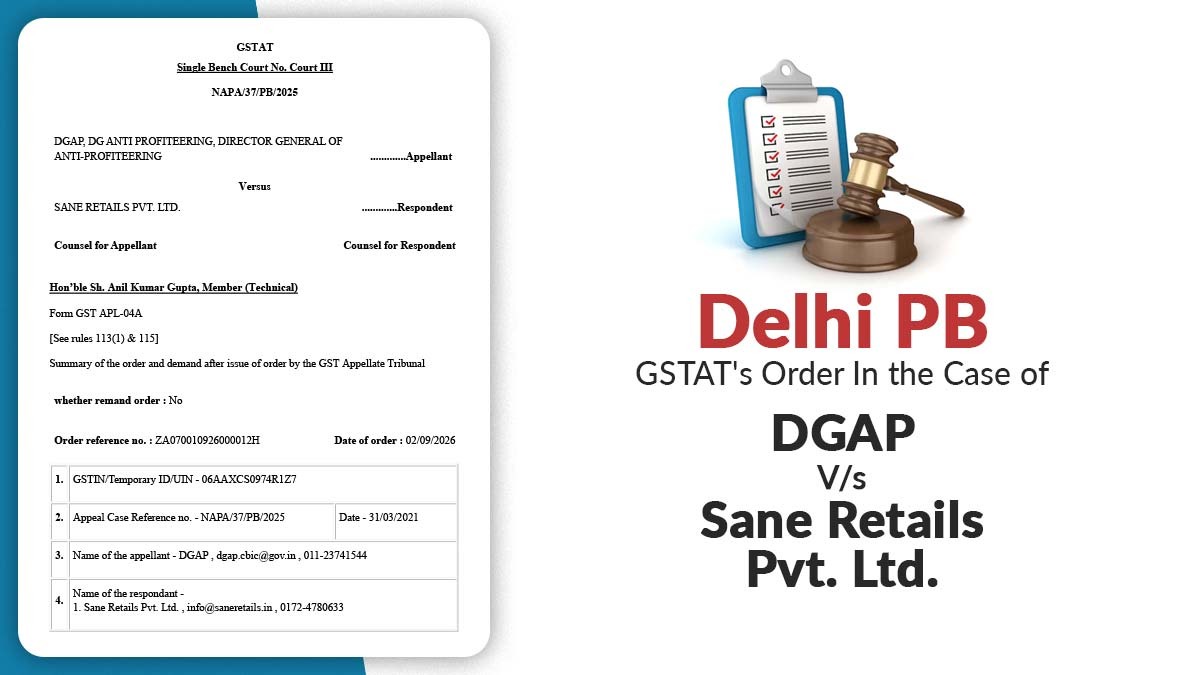
The GST Appellate Tribunal at Delhi has said that electronic gift vouchers (EGVs) can be a mode of passing on a GST rate reduction, where they furnish customers with a direct monetary credit without conditions, expiry, or usage restrictions.
The ruling came in proceedings involving Sane Retails Pvt. Ltd., accused of failing to pass on a GST reduction from 28% to 18% on MI LED Television 4A 80 cm. The tribunal discovered that the company complied with the anti-profiteering requirement, but did not account for Rs 10,241.
Anil Kumar Gupta, Technical Member of the GSTAT Principal Bench, heard the matter. He stated that u/s 171 of the CGST Act, it is mandatory to pass on the benefits of a tax rate reduction to customers.
“This Tribunal also notes that the objective of the anti-profiteering provisions under Section 171 of the CGST Act, 2017 is to ensure that the benefit of GST rate reduction is passed on to the consumers/customers and that the supplier of goods and services should not make profit from the reduction of the tax rate under GST. The provision does not prescribe any particular mode or manner in which the benefit is required to be passed on. What is essential is that the benefit reaches the ultimate recipient and the supplier does not retain the same.”, it stated.
Rs 7,79,947 is the computed profiteered amount by the Directorate General of Anti-Profiteering (DGAP). Credit notes of Rs 2,21,056 issued to 174 customers for cancelled or returned transactions were considered, reducing the amount to ₹5,58,891. Sane Retail furnishes records exhibiting EGVs of Rs 5,48,650 issued against 488 customer orders.
The DGAP objected to the view that EGVs constitute a valid method. Citing the Delhi High Court’s observations in the Reckitt Benckiser India Pvt. Ltd. vs. Union of India case, it argued that the benefit should reach customers through a commensurate price reduction or a direct refund.
The tribunal considered the explanation. It discovered that the EGV balance was credited to customers’ wallets without an expiry date and could be used without restrictions. The credits were traceable to individual transactions.
“The EGV balance represents a monetary value standing to the credit of the customer, and therefore, the issuance of EGVs constitutes a monetary transfer of the benefit amount by the Company to the customer.”, the tribunal observed, carrying that issuance of the vouchers comprises a monetary transfer of the benefit.
The tribunal did not accept the objection to the description “Offers and cashback” appearing against the credits. It determined that this was a system-generated description and did not change the transaction.
The Tribunal distinguished the Reckitt Benckiser case, noting that the earlier case involved festive discounts, cross-subsidies, or additional quantities, whereas EGVs were essentially monetary credits.
Recommended: Delhi (PB) GSTAT Finds No Profiteering as ITC-to-Purchase Ratio Decreased by 0.12% After GST Implementation
A difference of ₹10,241 remained between the revised profiteering amount and the EGVs issued. Sane Retails could not link this balance to any specific customer or invoice and proposed depositing it into the Central Consumer Welfare Fund.
The tribunal accepted the proposal and asked the company to deposit Rs 10,241 within 30 days, with 18% interest from the collection date of the higher amount until deposit.
| Case Title | DGAP Vs Sane Retails Pvt. Ltd. |
| Case No. | NAPA/37/PB/2025 |
| GSTIN | 06AAXCS0974R1Z7 |
| Delhi PB GSTAT | Read Order |