

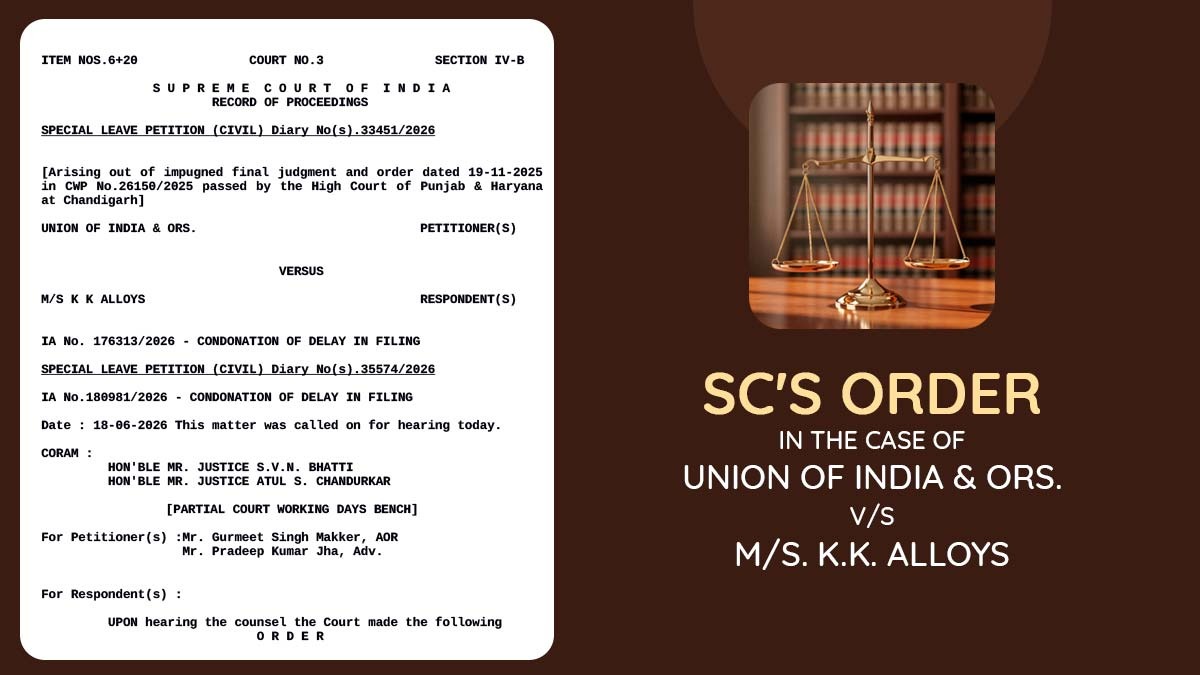
The Case
The dispute concerns the scope of powers granted to GST authorities under Rule 86A of the Central Goods and Services Tax (CGST) Rules, 2017, to block the utilisation of Input Tax Credit (ITC) available in a taxpayer’s Electronic Credit Ledger (ECL).
The taxpayers challenged the tax authorities’ action of blocking an amount that exceeded the actual ITC balance available in the ledger.
This practice, commonly referred to as “negative blocking”, effectively restricts taxpayers from utilising future ITC credits beyond the amount currently available in their Electronic Credit Ledger.
Authorities aimed to limit credit use to existing balances, creating a negative balance in anticipation of future credits. The Punjab and Haryana High Court stated that Rule 86A permits only a temporary restriction on the use of existing ITC when the Commissioner has reason to believe that such credit has been claimed fraudulently or is otherwise ineligible.
It held that the Rule does not provide power to the authorities to block future credits or generate a negative balance in the Electronic Credit Ledger.
The High Court said that although Rule 86A does not mandate issuance of a prior notice because of the preventive nature of the power, recovery of allegedly inadmissible credit must nevertheless be undertaken via the statutory adjudication and recovery procedures mentioned under Sections 73 and 74 of the CGST/PGST Acts.
The revenue was not satisfied with the decision and therefore filed Special Leave Petitions before the Supreme Court.
Issue:
Whether Rule 86A of the CGST Rules furnishes power to the GST authorities to block the Electronic Credit Ledger by an amount surpassing the Input Tax Credit actually available during the passing of the blocking order, thereby generating a negative balance, and whether the High Court’s clarification restricting such action warrants interference by the Supreme Court.
Held That:
The Supreme Court did not interfere with the Punjab and Haryana High Court ruling. After forgiving the delay, the Court rejected the Special Leave Petitions, holding that no case for interference under Article 136 of the Constitution was made out.
The Supreme Court, while dismissing the petitions, stated that the revenue can pursue any other remedies available under law for tax recovery or ineligible credit. Consequently, the judgment of the High Court reached finality.
Read Also: Kerala HC: GST ITC Cannot Be Denied if Tax Returns Filed Within Section 16(5) Deadline
Therefore, it is confirmed that Rule 86A is solely a preventive measure allowing temporary restriction on the usage of existing input tax credit lying in the Electronic Credit Ledger where the competent authority forms the requisite “reason to believe” concerning fraudulent or ineligible credit.
The rule cannot be used to create a negative balance or to block credits that will be obtained in the future.
If the department asks to recover incorrectly claimed or fraudulently claimed ITC beyond the available balance, it should take support from the adjudication and recovery norms specified in Sections 73 or 74 (now Section 74A, wherever applicable) of the CGST Act and recover the dues as per the regulatory procedure.
| Case Title | Union of India & ORS. vs. M/S K.K.Alloys |
| Case No. | Diary No(s).33451/2026 |
| For Petitioner | Mr Gurmeet Singh Makker and Mr Pradeep Kumar Jha |
| Supreme Court | Read Order |