The latest GST council gatherings have missed the mark regarding desire as the absence of agreement on the issue of tax organization or ‘double control’ implies that April 1, 2017, due date for GST usage looks unachievable.

Powerd By SAG INFOTECH
Notifications can be turned of anytime from browser settings
The latest GST council gatherings have missed the mark regarding desire as the absence of agreement on the issue of tax organization or ‘double control’ implies that April 1, 2017, due date for GST usage looks unachievable.
An announced for all the 2.1 lakh dealers in the State and about 28,000 in the capital city of Visakhapatnam, made by the central government to register dealers under the Goods and Services Tax Act (GST), by January 15, 2017.

GST is being considered as the greatest tax change in the historical backdrop of free India and is being anticipated as one nation, one tax. Businesses are idealistic that GST will make uniform expense all through the nation.

GST is one indirect tax for the whole nation which makes India one unified common market. GST is a single tax on the supply of goods and services, credit of input tax paid at each stage will be available in the subsequent stage of value addition, which makes GST essentially a tax only on value addition at each stage. The final consumer will bear only the GST charged by the last dealer in the supply chain, with set-off benefits at all the previous stages.

Without uncertainty, the initiation of GST has ended up being the most critical and extensive taxation change that India has ever observed.
The case related to GST would be subjected to every state which India occupies in its reign, and the J&K is not untouched from this. As the state has subjected GST and also Jammu and Kashmir government has shaped an higher state board of trustees to investigate the issues, including the drafting of enactment, relating to joining the Centre’s proposed Goods and Services Tax (GST) and requested that the board present must report in three months.
A top authority mentioned that the GST Council might choose to diminish the assessment slabs under the Goods and Services Tax administration in the wake of investigating the income accumulated and the remuneration payouts to states. With industry requesting for bringing down of proposed GST rates of 5 , 12 , 18 and 28 percent post the demonetization, CBEC Chairman Najib Shah said the Centre and the states at present gather Rs 8 lakh crore from indirect charges, fewer custom duties, and a similar level of income must be gathered in the GST administration.
Goods and Service Tax (GST) pull up enormous tax collection changes for the state. With collected tax administration happening, it would prompt to reject wide assortments of expenses like amusement assessment, VAT, Central Sales Tax, entry charge from general things.
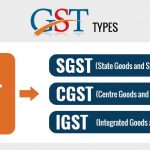
GST the goods and service tax is a reformative financial taxation scheme introduced in Indian constitution recently for structuring all the business units into the database of tax paying organization with equal consideration. The goods and service tax are implemented to subsume all the indirect taxes.