Inspired by the launch of Reliance Jio Phone, many Indian telecom operators like Airtel, Vodafone India and others may also soon come up with their own 4G bundled phone offers.

Powerd By SAG INFOTECH
Notifications can be turned of anytime from browser settings
Inspired by the launch of Reliance Jio Phone, many Indian telecom operators like Airtel, Vodafone India and others may also soon come up with their own 4G bundled phone offers.

Goods and service tax is applicable across the nation with simplified rules and regulations. But in case, if you are still in doubts and are not sure about the generation of bills in a restaurant, you must be prepared to understand the changes included in the bill provided by the restaurants.

According to the new notification issued by the government, now, retailers and manufacturers can sell their old inventory as per the new GST prices till September. But several industries, companies, and businesses are upset with this announcement as to why the government has not issued this notification earlier.
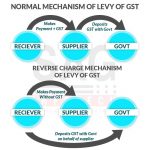
Reverse charge is a mechanism under which the recipient of the goods or services is liable to pay the tax instead of the provider of the goods and services. Under the normal taxation regime, the supplier collects the tax from the buyer and deposits the same after adjusting the output tax liability with the input tax credit available. But under reverse charge mechanism (RCM), liability to pay tax shifts from supplier to recipient.

The new compliance and rules of Goods and Service Tax (GST) regime will be restricting small vendors and restaurants from the selling online due to issues of TCS.

As expected Goods and Services Tax (GST) Act, 2017 has changed the Indian tax system fundamentally and is the biggest tax reform since Independence.
Goods and Service Tax (GST) is a new indirect tax scheme which is a consumption based tax. It will replace all the indirect taxes. It is biggest tax reform that will bring India in competition with other countries in respect to the indirect taxation platform.

Input tax credit in GST, As defined by section 2 (57) of the MGL (Model GST Law) and section 2 (1) (d) of the IGST Act, Input tax is related to a taxable entity which means the (IGST and CGST) in respect of CGST Act and (IGST and SGST) in respect of SGST Act is levied on every supply of goods or any services on the entity which is used by it or which is intended to to be consumed in the course of the business and subsumes the tax payable under sub-section (3) of section 7. In a simple way, input tax credit defines that an entity can reduce the taxes it paid on the inputs at the time of paying the taxes on output.

About three weeks left for the implementation of GST Regime in India and still the insurance industry is working effortlessly. The industry will not only require modifying their back-end systems but they will also require registering their offices across all the states in India.