

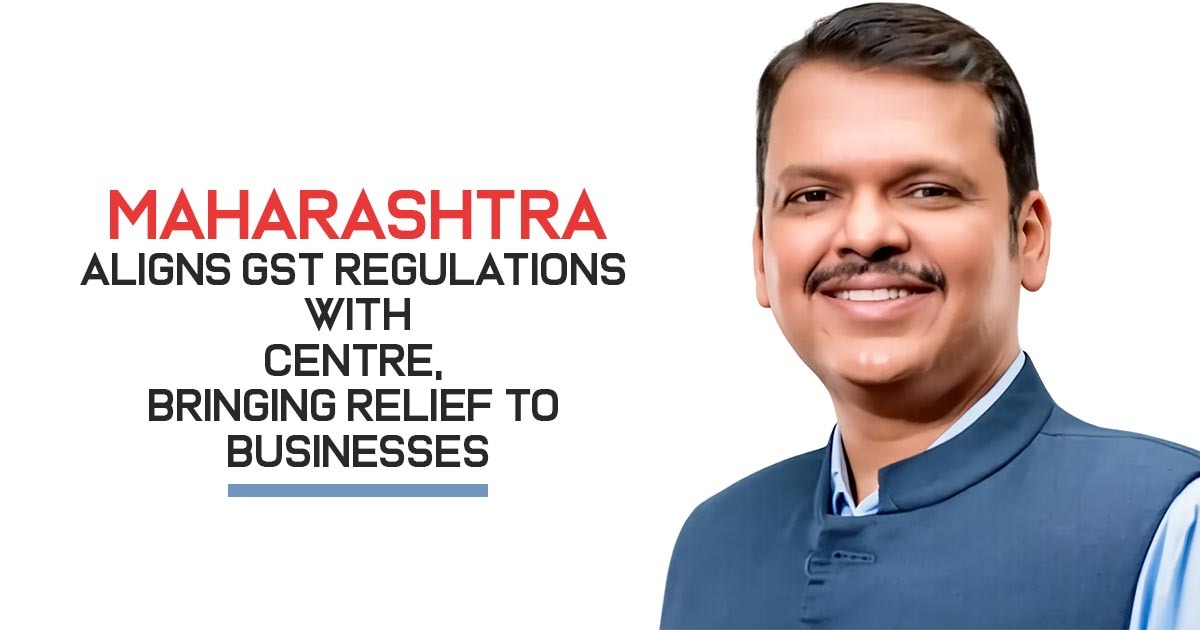
The state cabinet made the decision to ensure the constant execution of the Goods and Services Tax (GST) regime and reduce compliance ambiguities for taxpayers. This decision has approved changes to the Maharashtra Goods and Services Tax (MGST) Act, 2017, to bring it in compliance with recent amendments made to the Central Goods and Services Tax (CGST) Act.
The Chief Minister Devendra Fadnavis has made this decision in a cabinet meeting. As per the officials, the revisions comply with changes approved by the GST Council and thereafter incorporated by the Union government into the CGST Act.
A draft bill has been approved by the Maharashtra cabinet to make related revisions to the state legislation, confirming consistency between central and state GST statutes.
For businesses functioning in multiple states, alignment of GST norms is anticipated to furnish effective legal clarity, lessen interpretational disputes, and assist in keeping a uniform tax structure across the nation.
The changes arise from the decisions made during the 56th meeting of the GST Council, which is the highest federal body that recommends policy and legislative reforms related to the Goods and Services Tax (GST). Since GST is administered jointly by the central government and the states, amendments to the central law are usually reflected in state GST laws to maintain the integrity of the nationwide indirect tax system.
Taxpayers can be supported by the harmonisation of state and central provisions, as it avoids conflicting interpretations and eases compliance requirements.
It allows seamless administration of GST input tax credit, assessments and dispute resolution procedures under the tax structure. For legislative approval, the draft revisions to the MGST Act will be taken forward before being brought into effect.
In India, GST was introduced on July 1, 2017, substituting a host of central and state indirect taxes. The State of Maharashtra is one of the nation’s largest manufacturing and services economies and has a substantial share of GST collections. Regular alignment of state laws with central revisions is regarded as important to ensure smooth tax administration and improve business operations.