

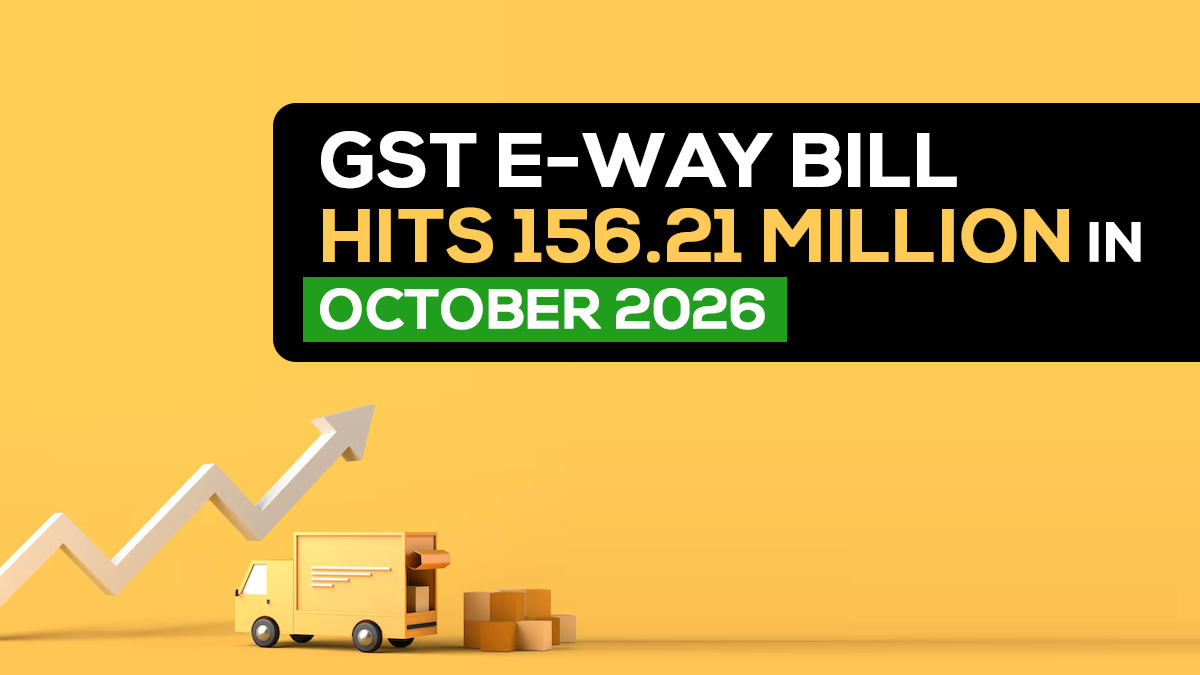
As per Goods and Services Tax Network (GSTN) data, e-way bill generation in October increased 23.14% year-on-year to a record high of 156.21 million, which was 126.86 million in the corresponding period.
An e-way bill is an electronic document required under the Goods and Services Tax (GST) regime for the movement of goods valued at more than Rs 50,000. It includes information about the goods, consignor, consignee, and transporter.
The GST E-way bill generation in September stood at 141.53 million, the previous record, and has since seen an increase of 10.37%. The latest figures signify a significant surge in the movement of goods during the festive season.
Following the rationalisation of GST rates last year, some purchases were deferred in September, and adjustments were made to inventory. However, sales and the movement of goods picked up towards the end of September, a trend that continued into October.
This October specifies a highly encouraging economic trend shown via an increase in e-way bill generation. Rationalising tax rates has led to a reduction in tax rates, which has encouraged taxpayers to comply with the rules. As a result, many more businesses, particularly those in the informal sector, have entered the formal tax net.
Also Read: Gen GST E Way Bill Software: A Complete E Waybill Solution For Suppliers & Transporters
The rise also reflects consumer demand and stronger economic activity supported by the peak festive season in the country. GST reforms, improved compliance, and strong demand during the festive season are further accelerating formal economic growth.
The demand during the festive season, the surge in the movement of goods, and strong business activity across the country are the reasons for growth in e-way bill generation in October. This is a very encouraging sign for GST revenue collection, and we can expect healthy growth in GST revenue, which reflects the underlying strength and momentum of the Indian economy.
This increase in e-way bill generation has come at a time when the government is making efforts to facilitate the transportation of goods and reduce compliance-related hurdles for businesses under the GST regime.
In its meeting on October 8, the GST Council proposed changes to curb routine inspections of goods in transit by road. In this proposed structure, vehicles may be stopped only when there is concrete information, and such action must be approved by an officer of the rank of Joint Commissioner or above.
The objective of these changes is to restrict inspection, detention, and seizure actions solely to the states where the supplier or the buyer is located, thereby excluding transit states from this enforcement process. Consequently, the seizure of goods or vehicles while in transit will no longer be allowed.