

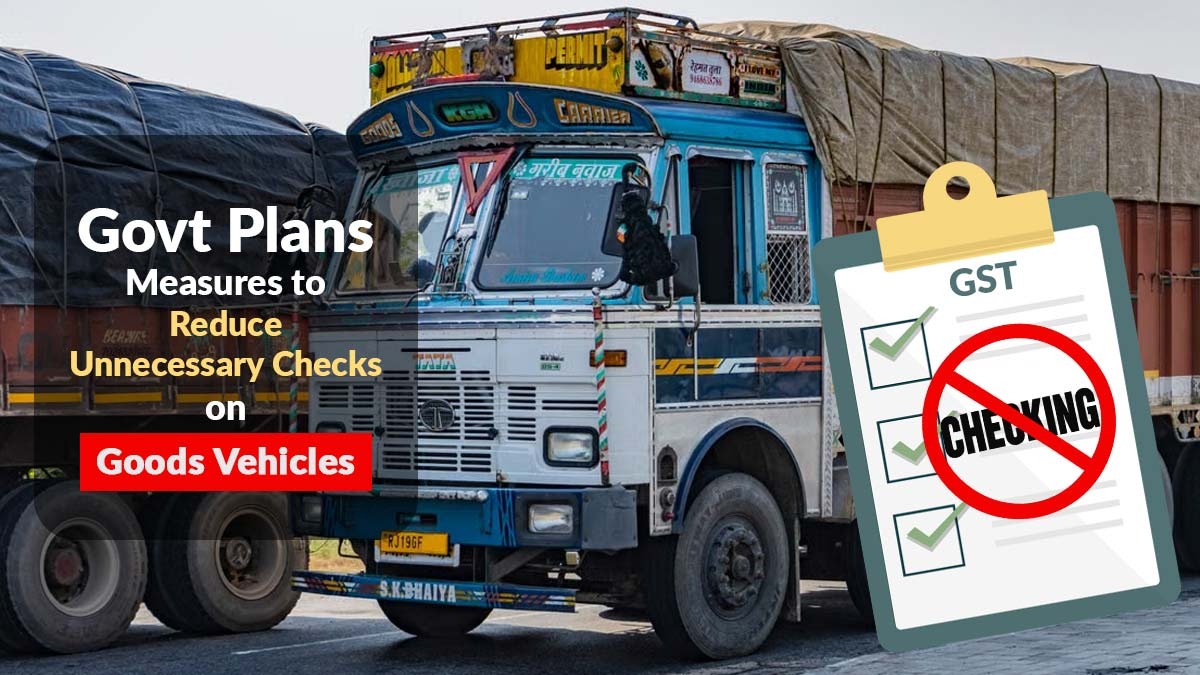
The government is thinking of revising GST inspection norms to reduce the unwanted checks on goods vehicles, such as truck drivers, transporters, and businessmen sending goods from one state to another.
In the proposed norms, particularly officials of the state from which the goods are sent or where they are delivered will have the power to stop and inspect vehicles. State officials on the route will not be permitted to stop trucks at their own discretion.
On October 8, the proposal was approved at the 57th meeting of the GST Council. However, only after the government’s official notification will the new rules come into force. Till then, the existing norms are to be followed.
Under the proposed rules, GST officials are not enabled to stop a goods vehicle solely on the grounds of suspicion. They should have information or effective proof to justify an inspection. An officer of the rank of Joint Commissioner and above will also need to provide their approval before a vehicle can be stopped. The purpose of this concept is to stop the unnecessary harassment of traders and transporters and to ensure that a valid reason is needed to stop a vehicle.
In this proposed revision, the requirement to have the necessary documents when transporting goods shall not be eliminated. Under the provision, a GST e-way bill is required for goods whose value is more than Rs 50,000, but there are some exceptions.
Under the rules, this requirement applies to both intrastate and interstate transportation. Even after the new rules come into effect, officials can check e-way bills and other essential documents through the system. Therefore, businesses and transporters must ensure that their documentation is entirely accurate.
Currently, GST officials in the states through which a vehicle passes can stop trucks to inspect their documents. This can lead to delivery delays and create further problems for businesses. These checks are anticipated to be restricted under the proposed norms.
Also Read: Is GST E-Way Bill Mandatory For Even 1 KM of Distance?
For example, a truck transporting goods from Delhi to Punjab passing through Haryana will not be stopped at the discretion of Haryana officials under the new rules. The revisions must eliminate unnecessary inspections, save time, and assist in getting goods to their destinations smoothly.
Source: studycafe.in