

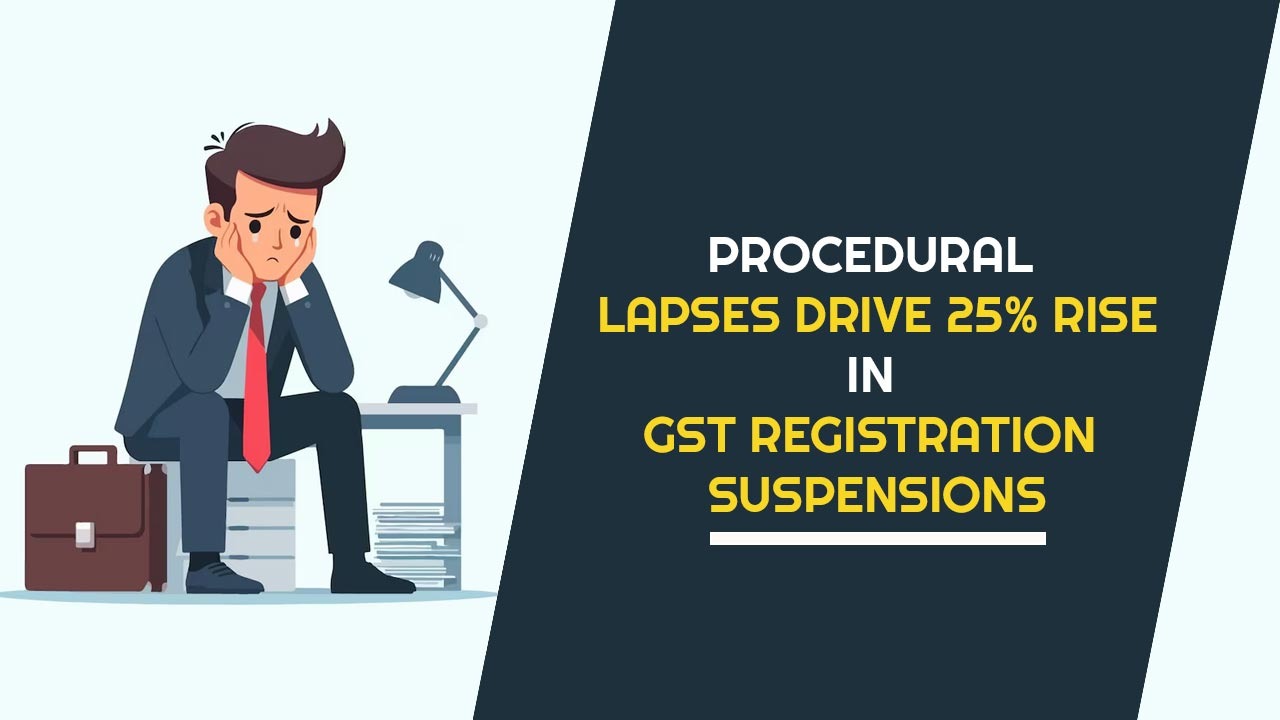
Over the past year, GST registration suspensions have increased by nearly 25%, primarily due to procedural and compliance-related lapses.
According to Ahmedabad-based tax experts, many genuine businesses have faced suspension not due to tax evasion but because of filing errors, documentation issues, and other procedural non-compliances.
Nowadays, procedural lapses such as non-filing of returns, non-updating of bank details or non-response to notices are the reasons that trigger a large number of GST registration suspensions rather than deliberate tax evasion.
It is realised that various genuine businesses have had their registration suspended merely because they are not able to issue invoices or their customers refuse to transact with them.
Genuine businesses invest substantial time and resources rectifying problems, such as disallowed Input Tax Credit from supplier defaults or automated compliance actions, even though they have no intention of tax evasion.
Many cases have emerged from automated compliance failures instead of intentional attempts to evade tax. Routine prerequisites are often skipped by businesses, resulting in notices that eventually lead to the suspension of their GST registration.
On suspension of GST registration, businesses encounter issues in performing normal operations, which include issuing tax invoices and conducting regular business transactions, until the compliance issues are resolved.
Read Also: GST Forms: Return Filing, Registration, Challan, Refund, Invoice, Transition
The ITC rejection due to supplier defaults is one of the unresolved concerns. In various cases, buyers purchase goods, receive valid tax invoices, pay GST through banking channels and comply with all provisions.
Although they subsequently receive notices due to the supplier’s non-filing of returns, the supplier’s registration was cancelled retrospectively, or the supplier was later found to be non-genuine.
The other challenge is the inability to change GSTR-1 in specific cases. Some favourable High Court rulings are not consistently applied at the field level, thereby increasing the compliance burden for taxpayers.
Most business owners concentrate on filing taxes, however skips routine compliance. By the time they know about the mistake, the registration has already been suspended.
According to a senior GST official, the initiation of suspension arises merely after provisions under the GST law are triggered and are meant to confirm compliance.