India doing well in the ease of doing business criteria means an increase in foreign investments but India’s domestic industries are still getting at ease with GST.


Powerd By SAG INFOTECH
Notifications can be turned of anytime from browser settings
India doing well in the ease of doing business criteria means an increase in foreign investments but India’s domestic industries are still getting at ease with GST.

A total of 9 days passed since daily wage labourers from the sandstone industry of Rajasthan to get a employment for a day in the dry land of Bhilwara by lifting sandstone slabs.
The current sorry state of the once flourishing Surat’s Textile Industry can be attributed to the policies of the State Government.

Malaysia is thinking to discard the goods and services tax (GST) in the country. It has been three years of GST roll out in Malaysia and it is advisable for India to move deliberately in the upcoming years as India also needs to stabilize the new indirect tax regime rolled out in July 2017.
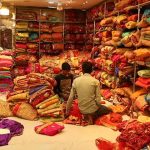
The GST aspires to be ‘One Nation One Market One Tax’. But the existing multiple tax slabs in India’s new TAX law means that anti-profiteering practices are on the rise especially in places where GST awareness is minimal.

A statement by a finance ministry official confirms that there is no likely to be a GST on free banking services like ATM withdrawals and issuance of chequebooks.
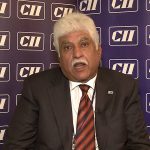
The recently made president of Confederation of Indian Industry (CII) Rakesh Bharti Mittal came against the multiple numbers of tax slabs of GST and asked for rather rationalised tax slab structure.

GST was a complete overhaul of the existing taxation system in India. Powered by the GSTN Network, it was India’s first big step towards a true digital economy.
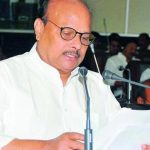
Yanamala Rama Krishnudu, Minister of Finance and Planning for the State of Andhra Pradesh and also a senior politician from the TDP, has raised concerns over the effectiveness of the GST.