


Currently, businesses produce more paperwork than in the past, including tax computations, balance sheets, audit notes, compliance statements, and performance reports. Such documents include crucial financial insights, but it is not easy to interpret at a glance because they are longer and contain technical information. Decision makers require clarity instead of data.
The ITR filing software fills the same gap by turning intricate financial data into structured, easy-to-understand summaries.
The software, rather than pushing professionals to sift through pages of calculations and legal terminology, extracts numbers, shows variances, and presents a concise overview of the tax and compliance position.
Apart from basic filing operations, modern ITR systems examine patterns, fetch inconsistencies, and determine risks or missed opportunities. The outcome is a solution-driven summary and not a simplified report that navigates corrective measures, supports strategic planning, and strengthens compliance management.
Smart Report Summarisation Requirements
Tax and compliance reports often consist of detailed breakdowns of income sources, deductions, tax liabilities, carry-forwards, advance tax payments, and audit observations. Businesses and professionals who review each section manually, delays and potential oversight can be the outcome.
ITR software resolves this challenge by:
1. Automated Data Aggregation
Automated data collection is the initial stage in report summarisation. The IT return filing software integrates with accounting systems, bank statements, payroll modules, and GST portals to collect pertinent financial data.
Rather than manually importing spreadsheets or reconciling accounts, the software:

This real-time data aggregation confirms that summaries are built on precise and up-to-date information.
2. Structured Categorisation Data
After data is collected, the software classifies it into logical segments such as:

The software, via structuring the data, removes redundancy and groups pertinent data points together. The same makes summarisation appropriate and simpler to interpret.
3. Intelligent Highlighting of Key Findings
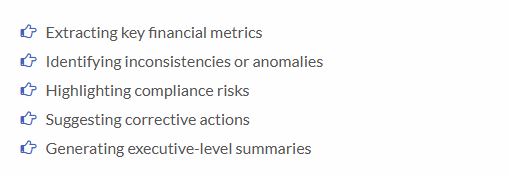
Modern tax filing software secures a robust feature, i.e., it shows findings automatically. Instead of presenting a 40-page computation sheet, it generates a condensed overview that may comprise-
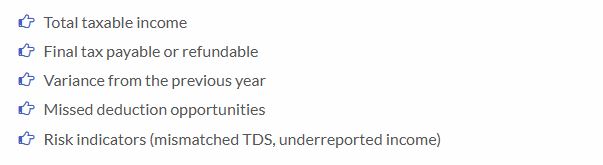
For instance, if the TDS reported in Form 26AS does not match the declared income, the system promptly shows the discrepancy and suggests reconciliation before filing.
4. Embedded Compliance Checks
The ITR software summarises and analyses. Built-in compliance engines run rule-based checks aligned with existing tax laws.
The system can detect:
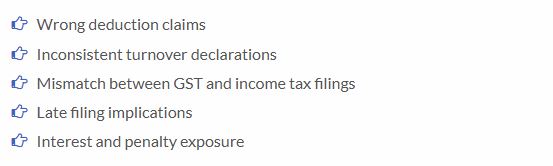
Thereafter, the summarised report illustrates such problems in a simplified “Action Required” format. The same proactive method reduces audit risks and ensures zero-error submissions.
Step 5: Generating Actionable Solutions
Advanced ITR software has the ability to pair summaries with practical solutions. Rather than only determining problems, it recommends subsequent measures such as-
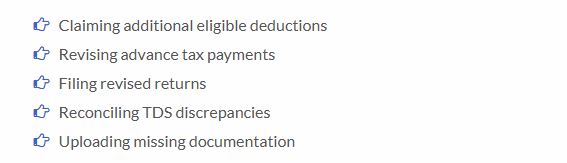
For businesses, the summary based on the solution permits faster decision-making and reduces dependency on manual intervention.
6. Visual Dashboards for Clarity
Various ITR filing software platforms include visual dashboards that illustrate summarised insights via charts, graphs, and status indicators.
These dashboards may show:
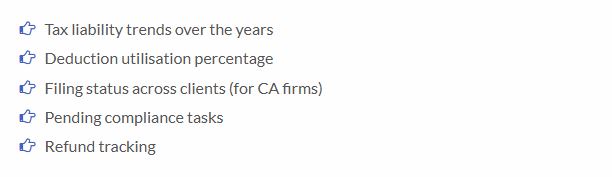
Visual summaries facilitate it for stakeholders to interpret financial data without requiring technical expertise.
7. Customizable Executive Reports
Client communication is important for CAs and tax consultants. ITR software allows the generation of executive summary reports tailored for-

These summaries include:
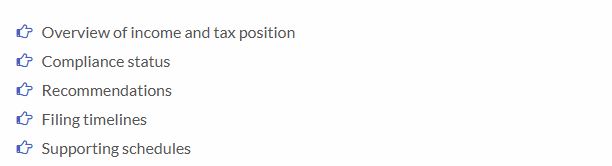
The feature of customised report summaries improves professionalism and enhances client transparency.
8. AI and Predictive Insights
Modern ITR software leverages artificial intelligence to deliver predictive analysis. The software, by analysing historical data patterns, can-
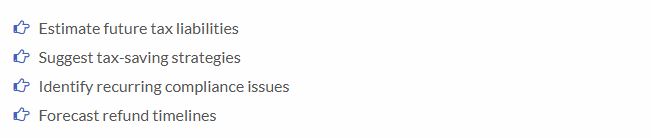
The same strategy transforms summarisation from reactive reporting to proactive financial planning.
Benefits of ITR Software Summarisation
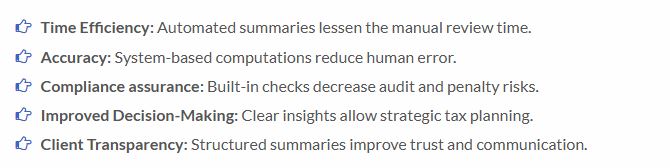
The summarisation capabilities of ITR filing software propose key benefits:
Future Report Summarisation
ITR software shall continue to integrate smarter summarisation tools to address the regulatory frameworks’ financial data intricacy. Future enhancements may comprise real-time anomaly detection, voice-based report explanations, and deeper integration with financial planning systems.
Cloud-based platforms will facilitate data access, enabling easier collaboration between taxpayers, accountants, and regulatory authorities.
Closure: The ITR software is more than just a simple tax return filing tool. At present, it acts as a complete reporting and analysis system that summarises intricate financial information into concise, solution-oriented insights. Modern ITR platform via integrating automation, compliance intelligence, visual dashboards, and predictive analytics furnishes authority to users to make effective decisions promptly and confidently.
Intelligent report summarisation is important in the world of time and precision. It confirms that businesses and individuals fulfil their compliance liabilities as well as optimise their financial strategies with clarity and confidence.