

In today’s statutory environment, it is common for businesses to file their financial statements in XBRL (eXtensible Business Reporting Language) format. XBRL enhances data accessibility by making financial information machine-readable, which facilitates efficient analysis and comparison by regulators, auditors, and stakeholders.
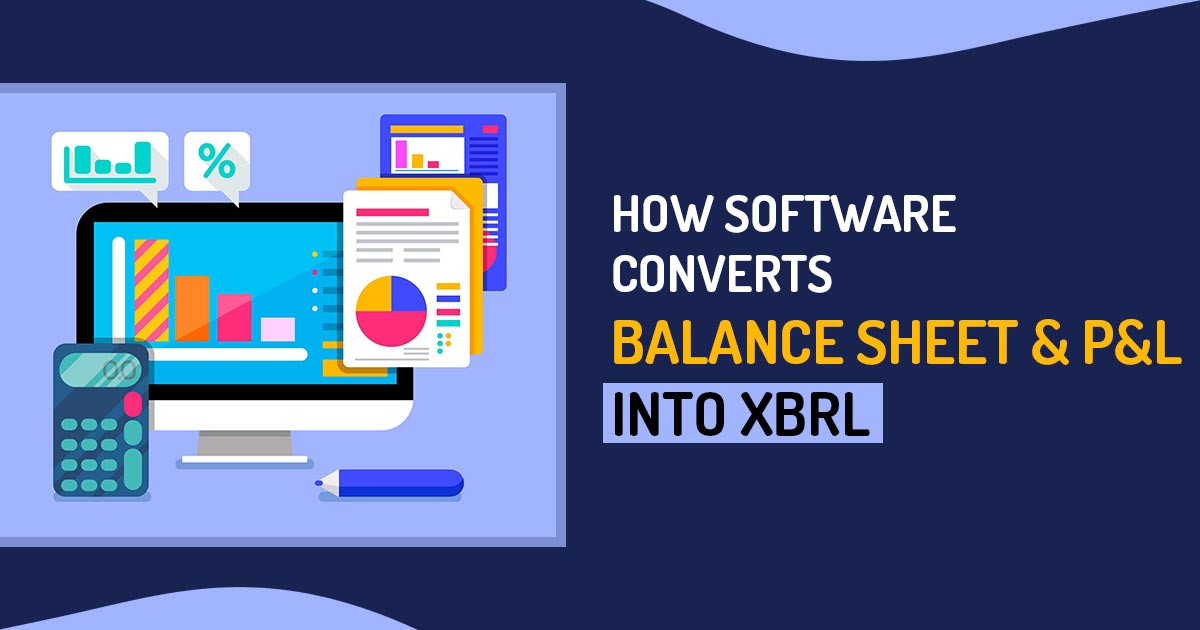
Modern software solutions have streamlined the daunting process of converting financial documents such as the Balance Sheet and Profit & Loss (P&L) statements into XBRL. The method of using the software to convert your financial statements into XBRL is mentioned below.
A Complete Guide to XBRL Frameworks and Global Importance
It is crucial to consider the importance of XBRL before initiating the conversion process. XBRL employs standardised tags for every financial element, including assets, liabilities, revenue, and expenses, which is opposite to the traditional formats such as PDFs or spreadsheets. This tagging system ensures that each data point is machine-readable, consistent, and allows for comparison across different companies.
The Indian regulatory bodies, like the Ministry of Corporate Affairs (MCA), require specific companies to submit their reports in XBRL format under the Companies Act, which makes compliance an important obligation instead of a mere option.
For XBRL filing, two foundational statements are needed.
- Preparation of Balance Sheet: It shows the financial position of the company, presenting its assets, liabilities, and equity at a certain time.
- Profit & Loss Statement (P&L): It explains the income, expenses, and profits of a company for a certain duration.
Step-1: Prepare Your Financial Statements
The appropriate use of XBRL software can be through assurance of the fact that your Balance Sheet and Profit & Loss (P&L) statements are accurate, complete, and finalised. The software performs optimally with finalised financial data; it is crucial to verify these documents thoroughly before proceeding.
- All accounts have correct balances
- Adjustments, provisions, and depreciation are accounted for
- Notes to accounts are ready, as they are often required in XBRL reporting
Businesses keep such statements in accounting software like Tally, SAP, or Excel. The majority of XBRL conversion tools can import data directly from these systems, reducing manual data entry.
Step 2: Choose The Correct XBRL Software
It is crucial to choose reliable XBRL software to ensure appropriate and compliant filings. The modern XBRL solutions, such as Gen XBRL software and other specialised tools approved by the Ministry of Corporate Affairs (MCA), deliver useful features that enhance the filing process. Such tools are made to ease the creation and submission of XBRL documents while complying with the regulatory requirements.
- Template-Based Conversion: Pre-defined templates for Balance Sheet and P&L.
- Automated Tagging: Maps your financial data to the correct XBRL taxonomy.
- Error-Checking: Validates data against MCA rules to prevent rejections.
- Direct Filing: Enables submission directly to the MCA portal without manual uploads.
Enterprise-level solutions for large companies with a difficult financial structure are chosen over free software options. The same preference is because of the reason that it has advanced features that such solutions propose, like the capability to manage multiple clients simultaneously, maintain comprehensive audit trails, and streamline multi-year reporting. Such operations are important to navigate the intricacies of large-scale financial management.
Step 3: Import Your Data
Post choosing software, the subsequent measure is to import financial data. Most tools authorise imports from Excel, CSV, or exports to accounting software. In the process of import:
- Validate that account heads match the software’s taxonomy. For example, “Accounts Receivable” must map accurately under assets.
Check for unmapped items, as missing tags can lead to errors in XBRL validation. - Specific software programs are now proposing features like AI-assisted mapping that can automatically recommend the correct taxonomy for account names. The same operation can improve efficiency, especially for organisations that handle a large number of ledger accounts, as it saves crucial time in the process of mapping.
Step 4: Map and Tag the Financial Data
Mapping links each item on your Balance Sheet and P&L to the correct XBRL taxonomy element. For example:
- Cash & Bank balances → CashAndCashEquivalents
- Revenue from operations → RevenueFromOperations
- Employee benefits expense → EmployeeBenefitExpense
XBRL software has been made with user-friendly interfaces that facilitate the process of creating reports, frequently incorporating drag-and-drop operations and pre-configured templates. Assuring the precision in the same phase is crucial, as errors in tagging can result in the denial of submissions by regulatory authorities.
Step 5: Validate and Review
Use the validation feature of the software after finishing the tagging. It checks:
- Wrong mapping of accounts
- Missing mandatory elements
- Calculation errors in totals or sub-totals
Step 6: Generate and File XBRL
Post-completion of the validation, the software generates the XBRL instance document (usually in .xbrl format) along with the cover sheet or schema file. Specific advanced tools allow direct online submission to the MCA or give a ready-to-upload package.
Tips to know before filing
- Ensure the fiscal year and company details are appropriate.
- Retain a backup of the generated XBRL files for audit purposes.
- Submit before the due date to avoid penalties.
Step 7: Maintaining Records
Apart from meeting regulatory needs, XBRL filing provides an important objective: it develops a digital archive of your financial statements. It’s crucial to keep detailed records of:
- XBRL Instance Files
- Validation Reports
- Mapping Templates Used
It enhances future filings by allowing template and mapping reuse, which lessens error risk.
Closure: With the appropriate software solutions, transforming your Balance Sheet and Profit & Loss Statement into XBRL format has become accessible. Businesses, through the adoption of a structured method that consists of data preparation, importation, tagging, validation, and filing, can get compliance while reducing the needed time and effort.
Contemporary XBRL tools reduce the possibility of manual errors and facilitate the connection between the accounting systems and regulatory bodies, improving overall efficiency in the reporting process.
For businesses, the use of dependable XBRL software has become important, as it has the motive to meet the statutory needs with efficiency and precision. The regular use of this software eases the process, which results in faster turnaround times, enhanced accuracy, and a reduction in stress for those engaged.