

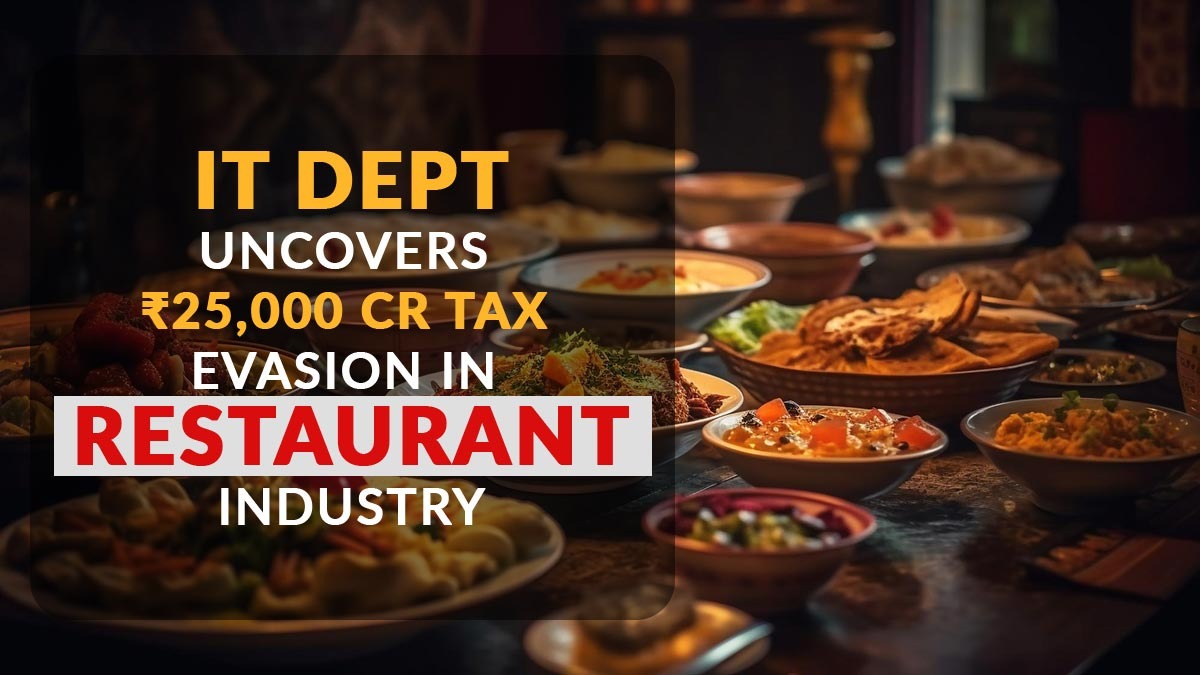
The Income Tax Department has detected large-scale tax evasion by restaurants, which could exceed ₹25,000 crore.
Based solely on data from Swiggy and Zomato, tax evasion is estimated at ₹7,500 crore, as TDS has been recorded against the names of 8,000 restaurants, yet they have not bothered to file tax returns. This estimate is based on an analysis of data spanning four years, from 2021-22 to 2024-25; data for the last financial year is not yet available.
In the financial year 2024-25, these restaurants generated nearly Rs 2,700 crore in revenue, resulting in a tax deduction of approximately Rs 25 crore.
Each time you place an order through a food delivery app, 0.1% of the bill amount is deducted as Tax Deducted at Source (TDS), which was initially set at 1% in the initial years.
Since TDS does not apply to dine-in customers, who typically account for three to four times the revenue that restaurants earn from food delivery, the actual revenue for restaurants is significantly higher than what is reflected through TDS from these delivery apps.
Over the four years from 2021-22, the government has collected around Rs 75 crore in TDS, while the number of restaurants participating in this system has increased by 65% during the same timeframe.
Important: All About Project Insight by I-T Department for Tax Evaders
Authorities are taking measures to start a new drive to get restaurants and eateries to file taxes that are due to the government.
In recent years, the Income Tax Department has resorted to a “nudge campaign.” Under this initiative, the department uses data to run targeted campaigns, encouraging individuals who are underreporting or concealing their income to pay their taxes, thereby enabling action against defaulters.
Restaurants have a history of underreporting income and were among the most vocal opponents of the Goods and Services Tax (GST) when it was rolled out.
In the previous year, a survey covering nearly 180,000 restaurants showed that, on average, they were underreporting income by 30 to 35 percent. Tax authorities surveyed around 70 establishments and reached out to over 60,000, requesting that they pay the amounts owed.
The tax department estimated that Rs 70,000 crore was not reported due to the concealment of bills in cloud-based systems. Additionally, payments were often funnelled through the accounts of waiters and workers to further suppress restaurant income. Although this situation has led to some improvements in compliance, the changes have not been significant.
Read Also: Many Restaurants in State Cheating Customers with Bogus GST Bills
Currently, tax authorities have implemented even more rigorous measures, identifying restaurants that typically have incomes ranging from Rs 2 to 5 crore, particularly in major cities. The figures are notably higher in metropolitan and larger urban areas.
News source: timesofindia.indiatimes.com