

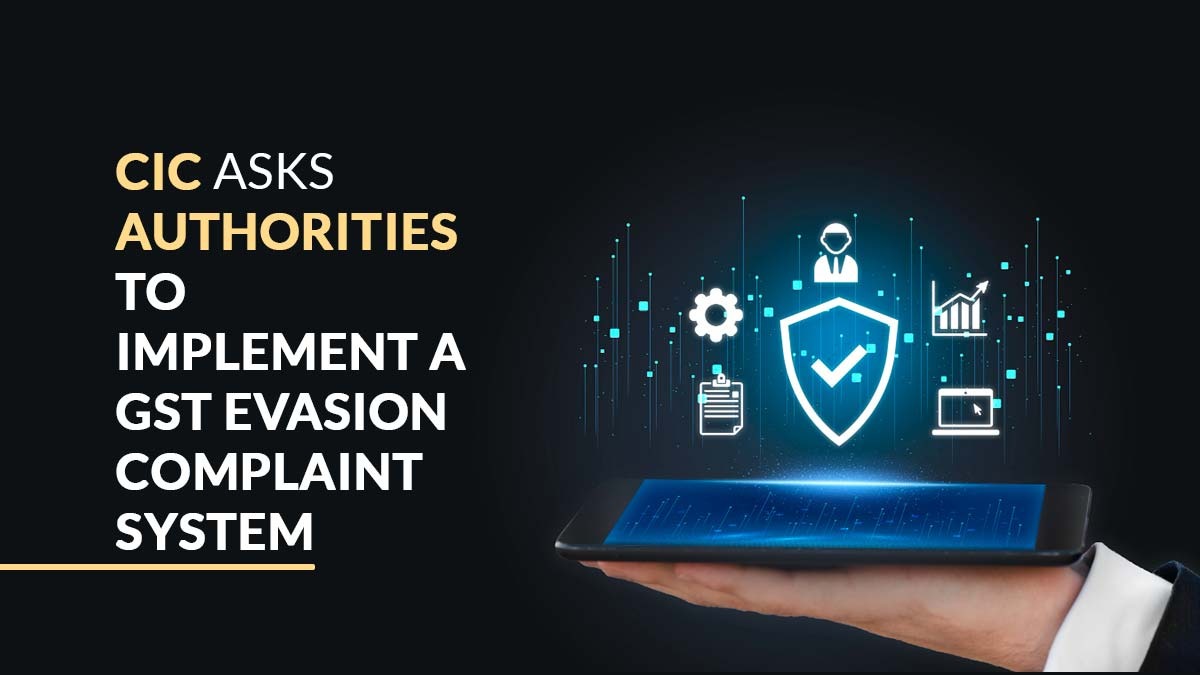
The absence of a formal status-tracking procedure for tax evasion complaints can enhance suspicion among complainants that their case may have been “quietly settled” or closed without due consideration, the Central Information Commission has cautioned, while advising GST authorities to roll out a monitoring system.
Information Commissioner Vinod Kumar Tiwari, in a recent order, has mentioned that complainants at present have no structured way to know the progress of their tax evasion petitions (TEPs), pushing them to repeatedly use the RTI route.
“The absence of any institutional mechanism within the Respondent Public Authority for enabling complainants/TEP filers to ascertain the status of their complaints often gives rise to avoidable suspicion and apprehension in the minds of such complainants that the matter may have been quietly settled or closed without due consideration of the allegations raised,” Tiwari stated.
He mentioned that “such opacity unnecessarily results in multiple RTI applications and avoidable second appeals before the Commission”.
Also Read: All About DGGI and Its Role in Preventing GST Evasion
The advisory was issued while addressing a group of ten appeals in which the applicant requested detailed information about the actions taken against various firms in response to her tax evasion complaints.
The Commission upheld the decision to deny the release of detailed information during the ongoing investigations, stating that such disclosures are exempt under the provisions of the RTI Act.
However, it emphasised that complainants have the right to know the general outcome of their complaints once the investigations are concluded.
Citing regulatory position, the Commission cited that complainants “would be certainly entitled to know as to how their complaints have been treated and the results thereof”, though not the detailed records of investigation.
Therefore, it asked the GST authorities to notify the applicant regarding the status and action taken on her complaints after the probes conclude.
The Commission, in its advisory, recommended that authorities “ought to evolve an appropriate administrative mechanism, preferably an online status-tracking facility… whereby complainants… may be able to view the broad status of their complaints.”
The same system shall encourage transparency, enhance public confidence, and lessen the burden of repetitive RTI applications.