

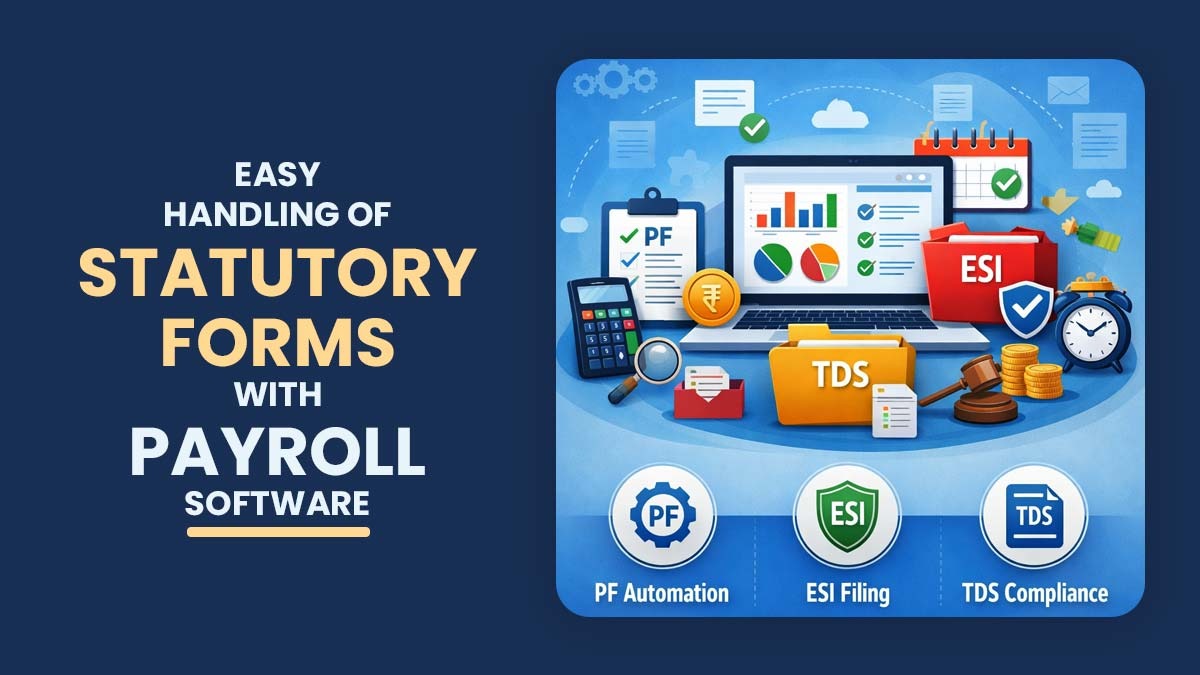
Payroll handling of paperwork is an important task for businesses. Companies must comply with various government norms related to employee payments, taxes, and benefits. These rules require specific forms for tax deductions, retirement funds, and health insurance, among others. Businesses may face fines and other statutory issues if there are errors or delays in completing these forms.
For companies, manual management of such forms can also cause errors, and it takes time, which leads to errors. Payroll software can resolve such issues. It automates the process of fulfilling the regulatory needs, making it simpler for companies to create, manage, and submit such crucial forms.
The blog illustrates how payroll software makes it simpler for businesses to manage such forms while complying with the standards.
Statutory Forms in Payroll
The mandated documents under the government, known as statutory forms, which the employers need to create and submit to authorities to ensure payroll compliance. Such forms consist of data concerning employee salaries, deductions, tax liabilities, and social security contributions.
Some commonly used statutory forms include:
- TDS return forms, such as Form 24Q
- Provident Fund forms for EPF contributions
- ESI contribution reports
- Professional Tax returns
- Labour welfare forms
- Salary and tax declaration forms
Employers need to prepare and file such forms within the mentioned deadlines. The manual handling of such forms needs calculations, documentation, and record-keeping.
Challenges of Managing Statutory Forms Manually
Before the recognition of the automated payroll system, various companies utilised spreadsheets and manual calculations to manage their payroll and confirm that they were complying with the norms. The same method has arisen with some challenges.
Time-Consuming Processes: Preparing payroll forms manually consists of collecting employee information, calculating deductions, and filling out forms for each person. It takes a lot of time for the HR and payroll teams.
High Risk of Mistakes: The manual management of all calculations increases the possibility of errors, such as getting tax deductions or retirement contributions wrong.
Changing Rules: Government laws for payroll and taxes often get revised. It is not easy to keep up with such updates without automated support.
Difficult Record-Keeping: Managing paperwork for numerous employees over several years can become quite chaotic without appropriate software to help streamline the process.
Read Also: How Payroll Software Helps Avoid Penalties & Compliance Fines
Due to these challenges, many organisations are transitioning to automated payroll solutions to simplify and enhance the reliability of their payroll management.
How Payroll Software Simplifies Statutory Form Management
Payroll software facilitates the management of employee salaries and ensures that companies adhere to the necessary rules and regulations. It automates the creation of required forms, making the entire process faster and more accurate. Here’s how payroll software simplifies managing government forms:
Automatic Deduction Calculations: The same software computes things such as taxes and social security contributions as per the earnings of each employee. It specifies no manual calculations, which lowers mistakes.
Easy Creation of Forms: A payroll can create forms after the employees’ details and pay information are entered. This generates various documents, such as tax return forms and salary certificates, in the appropriate format needed by the government. The same makes it easier for companies to finish their paperwork.
Regular Updates for Compliance: Often, the laws and tax norms shall be revised. Payroll software shall be regularly updated by its providers to keep everything aligned with the latest standards. Businesses, through this, do not need to worry about the changing law.
Organised Employee Data: All the information of the employee, like salary details and tax records, is stored by the software in one system. HR teams can find the data they require and can create reports, ensuring that they stay organised for any required audits.
Quick Filing of Returns: Various payroll systems permit direct online submission of the necessary forms, which can save much time. The software can organise the files in the correct format for employers to easily upload them.
Error Checking: Payroll software sometimes comprises features that assist in identifying the mistakes in employee data or tax calculations before the forms are sent out. This also lessens the chances of errors and rejections when submitting to government agencies.
Insightful Reports: Modern payroll software can generate effective reports that show information such as tax deductions and compliance status. Companies with these reports can track their payroll activities and make informed decisions.
Increased Efficiency for HR Teams: The software automates various tasks of payroll management and saves time for HR professionals. HR can focus on crucial tasks instead of spending hours on calculations and paperwork, and they can focus on employee development and overall business growth. Automation supports ensuring that all tasks are completed within the said time.
In summary, payroll software is a useful tool that facilitates the process of payroll and ensures precision and compliance while saving time and effort for businesses.
Advantages of Using Payroll Software for Statutory Compliance
The use of payroll software for handling statutory forms proposes various benefits for businesses, such as:
- Improved accuracy in payroll calculations
- Reduced compliance risks and penalties
- Faster generation and filing of statutory forms
- Better data organisation and record-keeping
- Time savings for HR and finance teams
Closure: The crucial part in managing payroll is handling forms; it can be difficult if performed manually. By automatically performing calculations, creating important forms, and keeping up with the latest norms of the government, payroll software streamlines this management.
The software proposes features such as automatic deductions from pay, organised data storage, updates on compliance, and the ability to quickly file returns. With the business’s look into digital solutions, the dependence on payroll software has become a reliable way to handle such legal forms while ensuring that payroll remains correct and updated.