

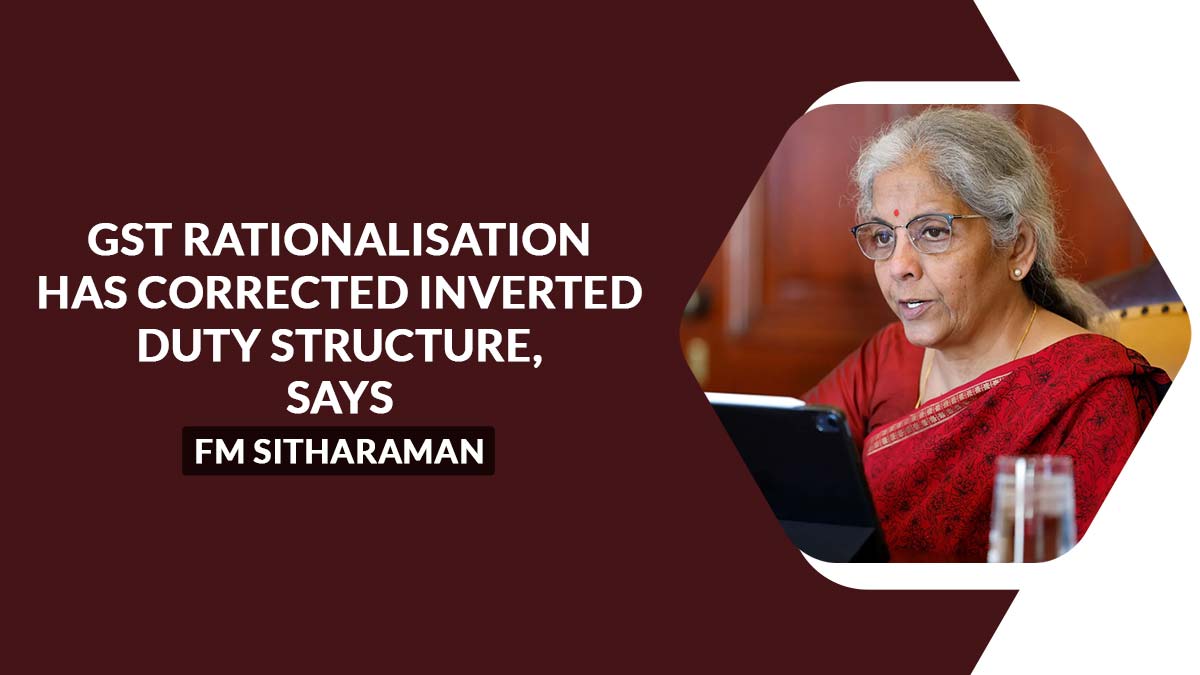
The Finance Minister Nirmala Sitharaman stated that the Goods and Services Tax (GST) rate rationalisation has rectified the inverted duty structure faced by various industries and ensured that any remaining cases identified by the industry will be addressed.
She answered the discussion in the Rajya Sabha concerning the Manipur Goods and Services tax (Second Amendment) Bill, 2025, and quoted that the overhaul has ensured that there is now either zero or the lowest 5% GST rate applicable on all essential items, and the eligible sectors continue to obtain ITC.
Criticising the Opposition for “shedding crocodile tears” on Manipur and staging a walkout rather than participating in the debate. The Manipur GST (Second Amendment) Bill, 2025, gives effect to the decisions of the 56th GST Council meeting. Under the President’s Rule, an Ordinance was issued on October 7 to implement the amendments. After the minister’s response, the Upper House sent the bill back to the Lok Sabha via a voice vote.
What is Inverted Duty Structure?
If the tax on the services and materials used to construct products is higher than the taxation on the finished products, we undergo what is known as an inverted duty structure under GST. This condition can lead to excess tax credits, which can improve the all over tax burden for companies and may result in higher costs for customers.
There is too much tax credit due on the inverted tax structure can greatly impact the company’s cash flow and working capital. To handle the major challenges that occur from a system, there are techniques in place for tax refunds that were used before the Goods and Services Tax (GST) and are now known under the GST system.