

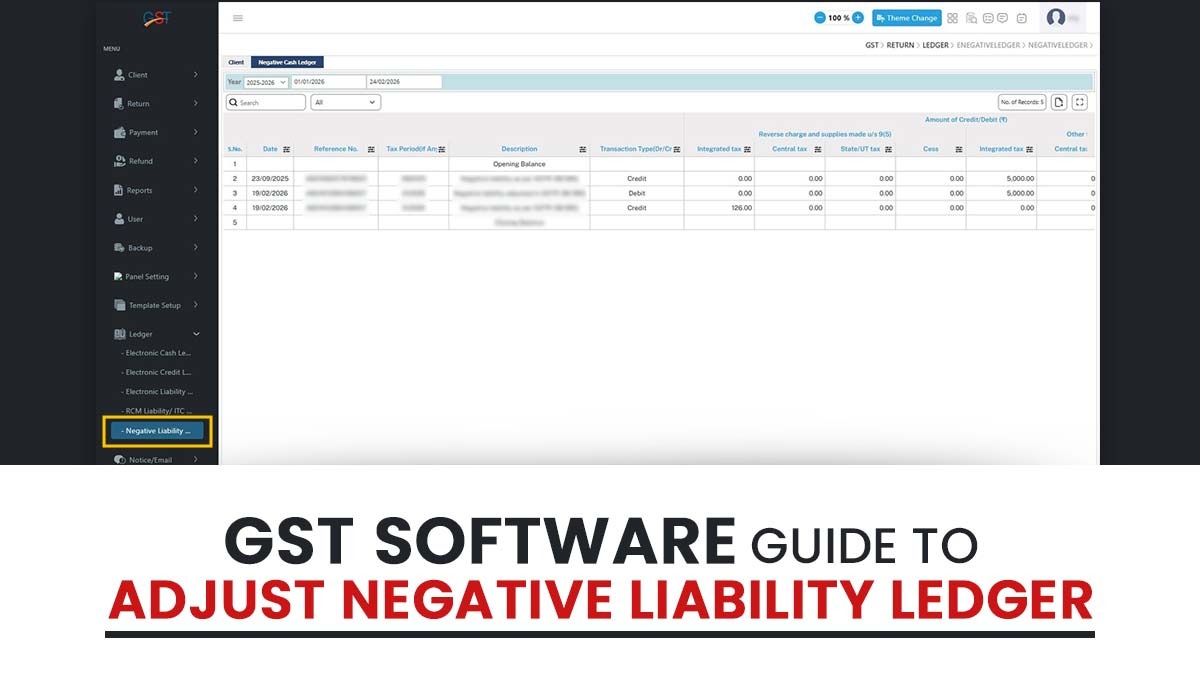
In India, the Goods and Services Tax (GST) framework incorporates advanced automated systems to enhance accuracy, transparency, and compliance in tax administration. One important aspect of GST compliance is the Negative Liability Ledger, which can often lead to confusion for both taxpayers and professionals. Therefore, having modern GST software is essential to resolve such issues.
The software perfectly determines, adjusts, and reconciles negative liability entries. The software streamlines the same procedure, reduces errors, and mitigates compliance risks, ensuring a seamless experience for all stakeholders involved.
Comprehending the Negative Liability Ledger Under GST
A Negative Liability Ledger arises when the tax obligations shown in a GST return are negative. Because of various adjustments, including overpayment of taxes, incorrect reporting, amendments made to previous returns, or the reversal of earlier liabilities, the same issue emerges.
Read Also: GST Return Filing Errors and How Software Controls Them
GST obligations must show the tax due; however, situations such as rectifying returns, issuing credit notes, or making adjustments for system-computed interest can result in a negative balance in the ledger. For accurate tax management and compliance, comprehending such factors is essential.
Negative entries do not necessarily show that a refund is due. They illustrate that the taxpayer had either incurred an overpayment on their taxes or that an earlier reported obligation has been adjusted downward. Such negative obligations must be handled accurately, as wrong management could result in discrepancies between tax returns, electronic ledgers, and records in the GST portal.
Causes of Negative Liability
Negative obligation emerges because of various operational or compliance-related causes:
- Changes incurred in GSTR-1 or GSTR-3B reduce outward tax liability
- Excess payment of tax under IGST, CGST, or SGST
- Reversal of interest or late fee incorrectly charged earlier
- System-driven recalculations following GST portal updates
- Adjustments after issuance of credit notes
From distinct factors, the intricacies and errors in handling negative liability arise. This shows the significance of using GST software, which can ease the process and improve accuracy.
GST Software Role in Determining the Negative Liability
GST software proposes a stringent solution for tracking and handling tax-pertinent information by continuously monitoring data from invoices, returns, and electronic ledgers to determine any discrepancies.
The software executes an automatic comparison between the existing tax liability and previously filed data when preparing or revising a return. If it is found that the revised numbers show a lower liability than earlier submissions, then the system shall exhibit this negative liability for review.
Advanced GST solutions establish integration with the GST portal operated via the Goods and Services Tax Network. This integration eases real-time synchronisation of ledger balances, allowing the software to determine entries of negative liabilities as soon as they appear in the Electronic Liability Ledger. This confirms precision and compliance in GST reporting and management.
Automated Adjustment Mechanism in GST Software
On determining negative liability in GST software, a systematic adjustment process gets triggered. Rather than leaving the negative balance unaddressed, the system offsets it against future tax liabilities.
For example, if a taxpayer has a negative IGST liability from an overpayment, then the software shall carry the balance forward and adjust the same against the IGST payable for the succeeding month. The same confirms that taxpayers can handle their tax liabilities without carrying unresolved negative balances.
GST software solutions comply with the following steps:
- Ledger Validation: Verifies electronic cash, credit, and liability ledgers.
- Tax Head Mapping: Ensures adjustments are incurred under the correct tax head.
- Auto Set-Off: Applies negative liability against future dues during return filing.
- Audit Trail Creation: Keeps detailed logs for compliance and scrutiny.
The same automated workflow removes the need for manual intervention and lessens the risks of wrong usage.
Managing Negative Liability During GSTR-3B Filing
GSTR-3B acts as the main return for settling liabilities under the Goods and Services Tax (GST). GST software holds an important role in computing the net tax payable, considering factors such as ITC, cash payments, and any negative liability carried forward from previous periods.
For cases where a negative liability exists, the software ensures that the same is shown in the appropriate sections of the returns, averting it from being wrongly categorised as a refund or an ITC claim.
The GST software aligns such adjustments with interest computations, specifying that interest is not charged on liabilities that do not exist due to negative balances. The same alignment is important following enhancements to the portal that relate to interest calculation.
Compliance Benefits of Software-Based Adjustments
Various compliance benefits are proposed in managing negative liability via GST software:
- Averts a mismatch between GST returns and electronic ledgers
- Ensures accurate tax payment without excess cash outflow
- Reduces notices of wrong liability reporting
- Keeps consistency across amended and original returns
- Facilitates audits and departmental scrutiny
Taxpayers, via automating such adjustments, stayed compliant with the GST norms while keeping clean and reconciled records.
Transparency and Reporting Features
The ability to furnish transparent reporting is an advantage of GST software. Users can access detailed summaries that exhibit how negative liability is generated, adjusted, and carried forward. Such reports are crucial for performing internal reviews, preparing for statutory audits, and addressing inquiries from tax authorities.
Also, one of the features of this software is alerts and validation before final submission. The same confirms that any adjustments to the negative liability comply with the GST norms and filing pre-requisites.
Closure: The Negative Liability Ledger illustrates a technical yet important part of GST compliance. If handled inaccurately, it can result in confusion, incorrect tax payments, or regulatory complications. GST software facilitates the same process by identifying negative liabilities, adjusting them against future obligations, and facilitating seamless integration with the GST portal.
In GST compliance, it is important to use efficient GST software to manage liability precisely, alleviate compliance challenges, and achieve long-term financial efficiency. GST software that automates adjustments to negative liabilities provides authority to both taxpayers and professionals to maintain compliance with precision and confidence.